Al Wa'ab City Friday Mosque____Qatar
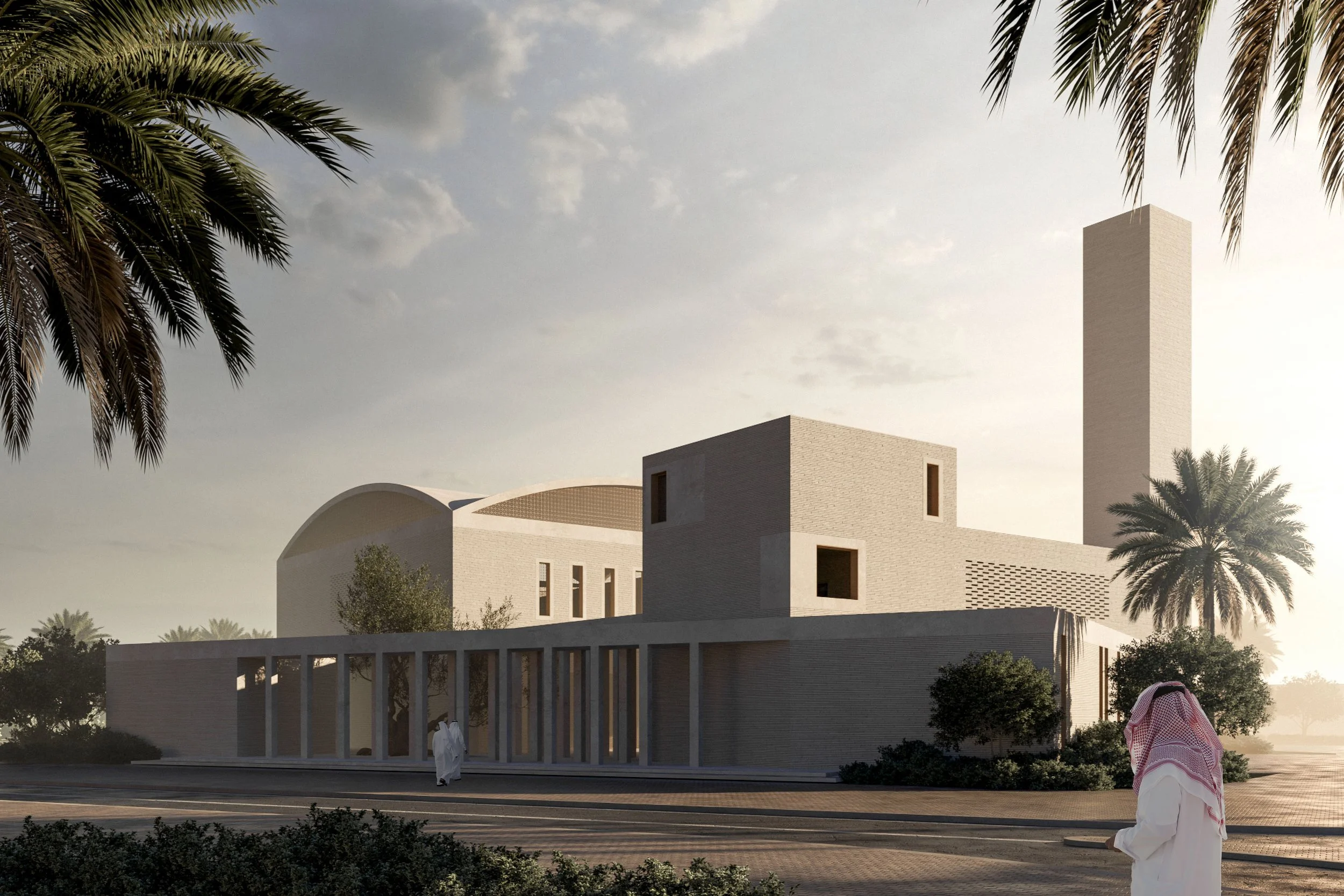
Al Wa'ab City Friday Mosque
-
Al Waab City, Doha, Qatar
-
Land area 8091 sqm, Total buit-up Area 4350 sqm
-
Main Halls
Male Praying Hall (800 worshipers)
Sahn Al Masjed Hall
Female Praying Hall (300 worshipers)
Auxiliary Facilities
Male Ablution and WC
Female Ablution and WC
Koran Center
NBK Charity HQ
Imam Residence
Mouazen Residence
Amenities (Minaret, stairs, mechanical rooms, store, etc.)
-
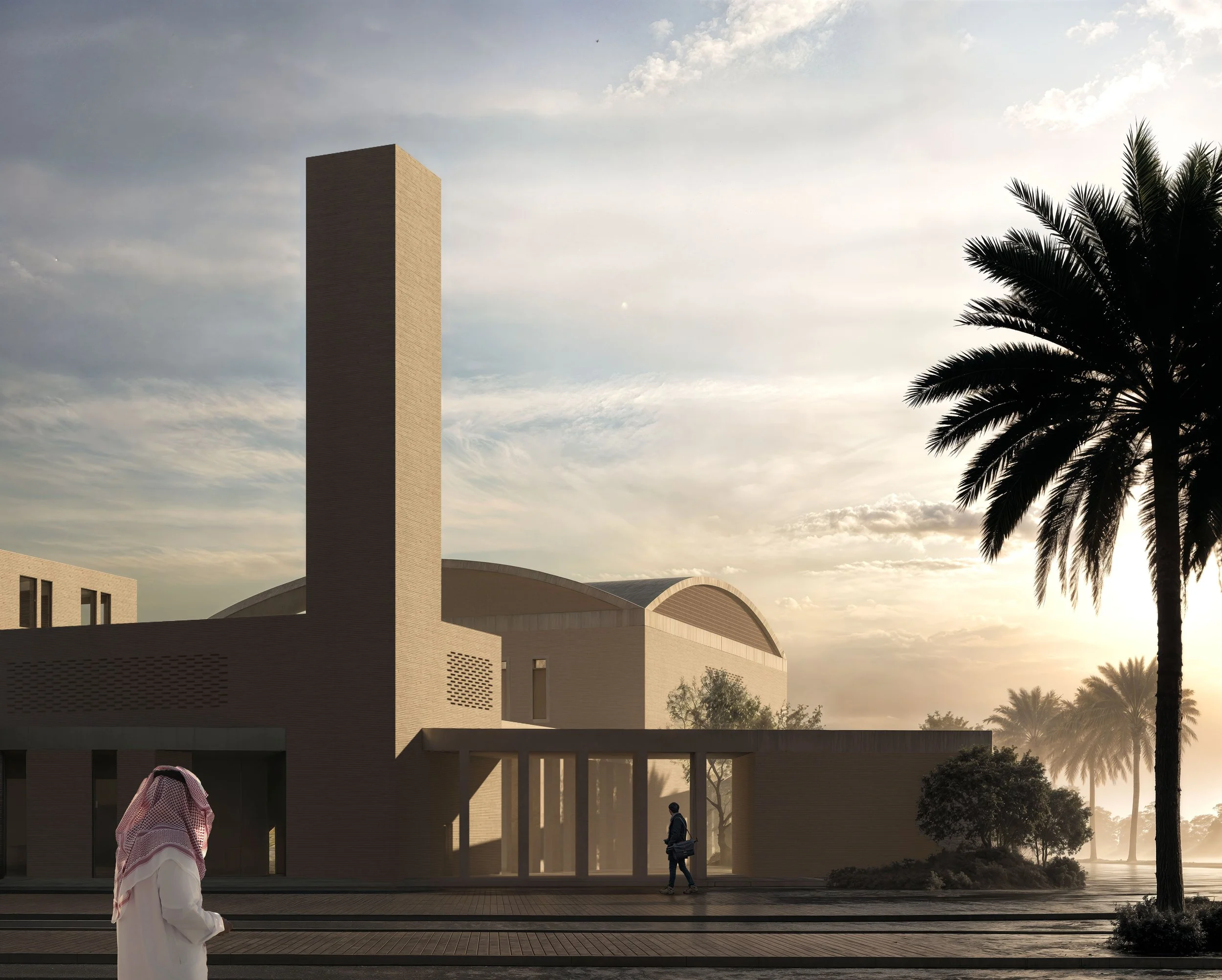
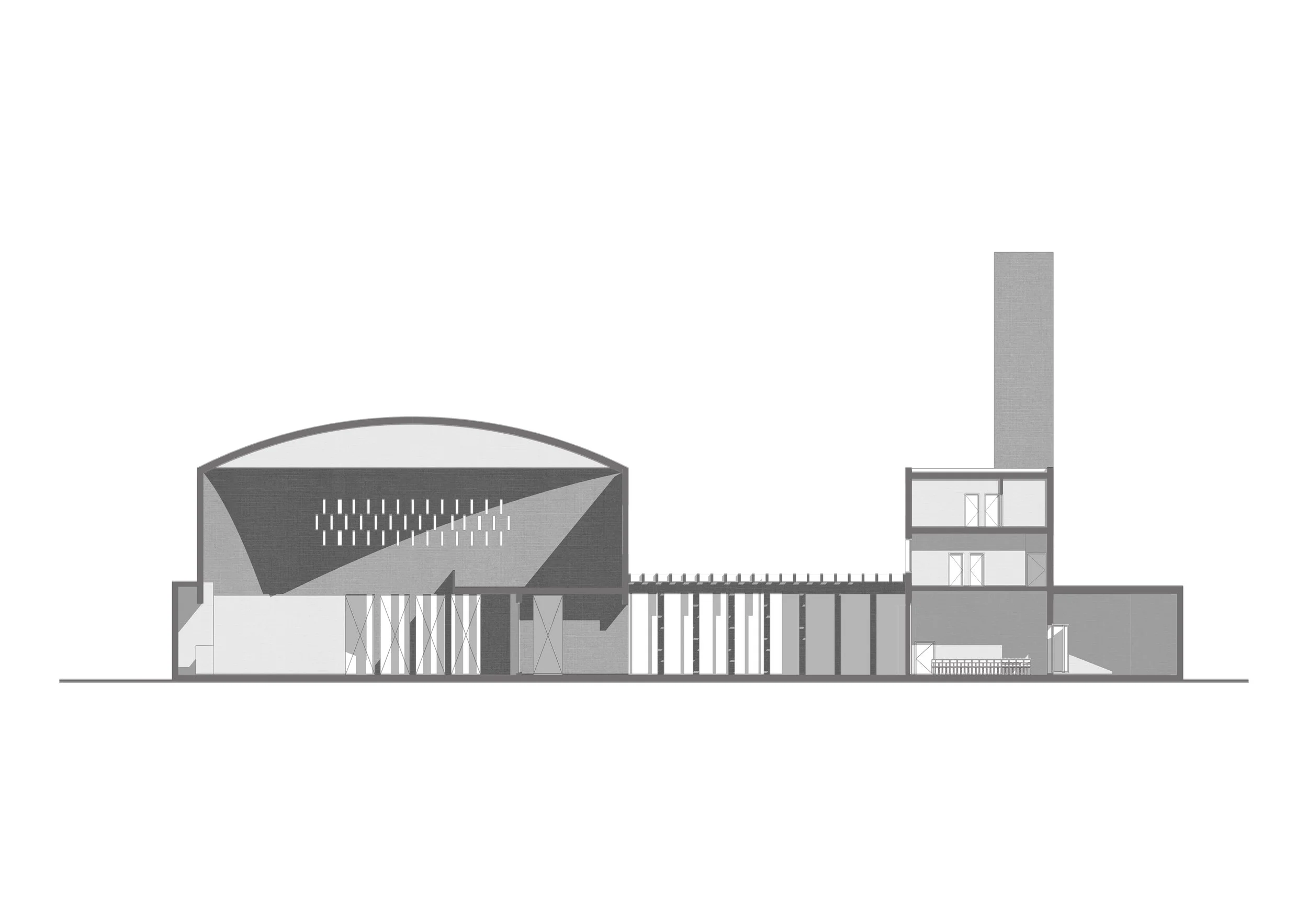
The design is rooted in one central idea: a journey from the public realm to the sacred.
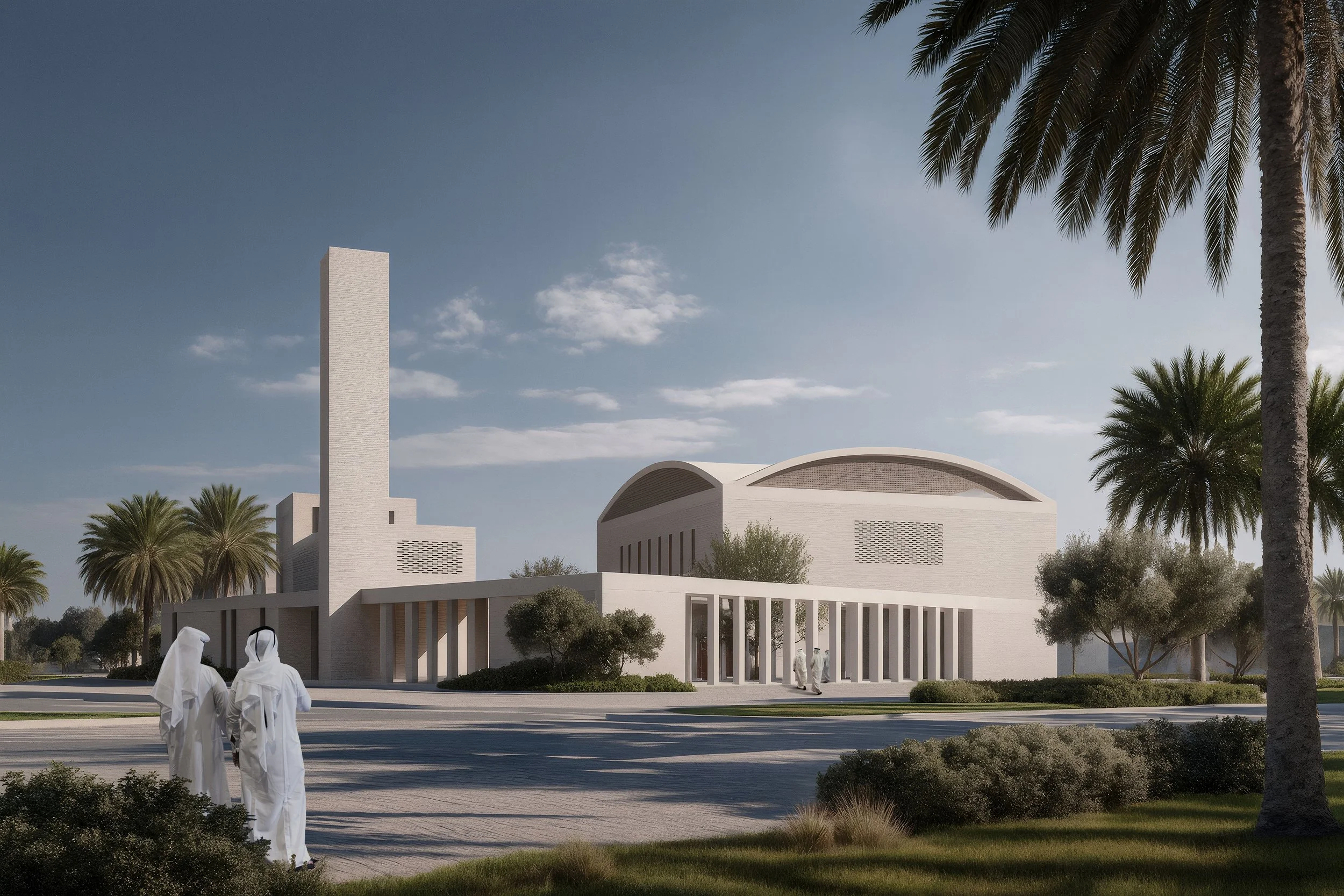
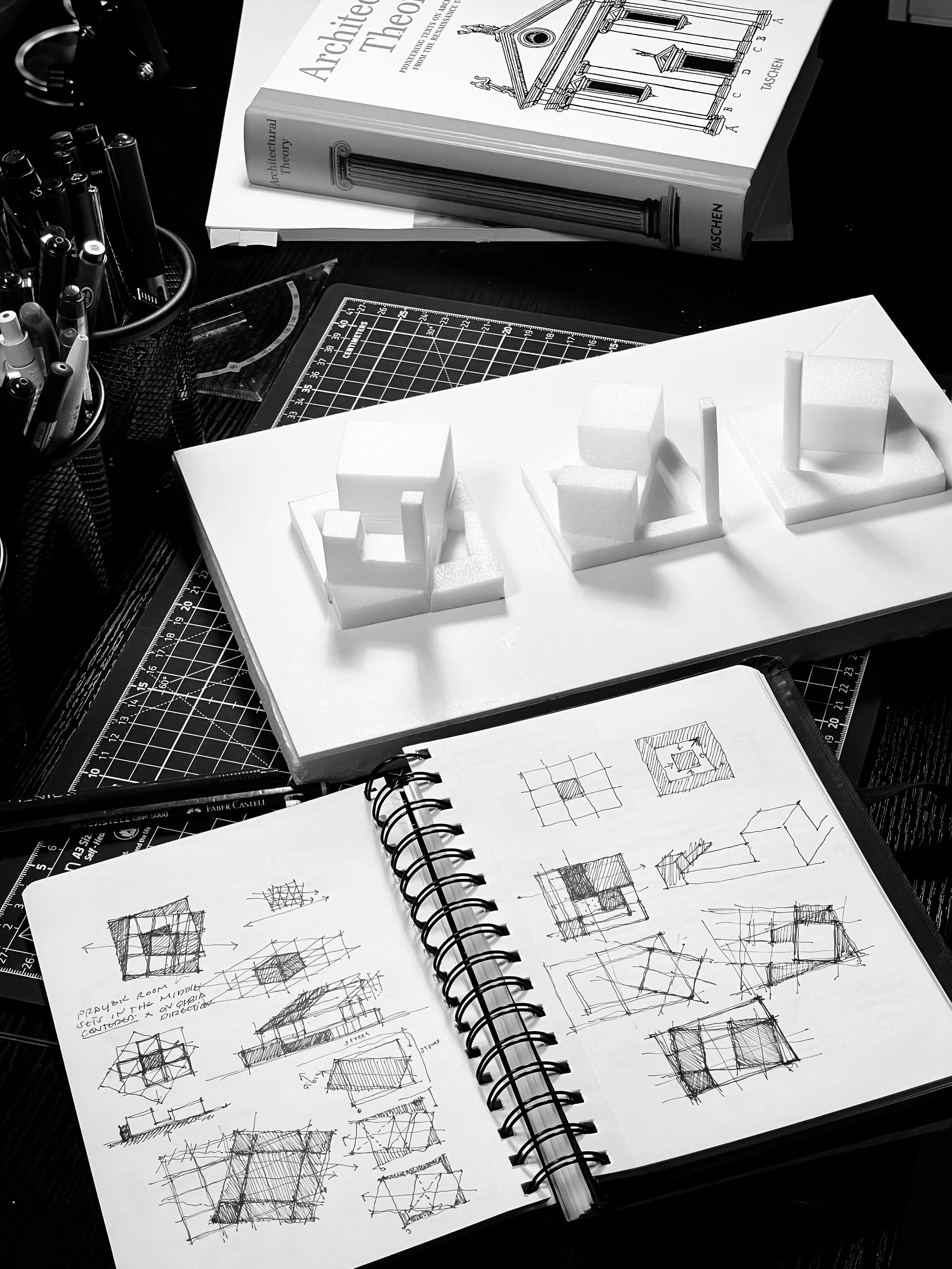
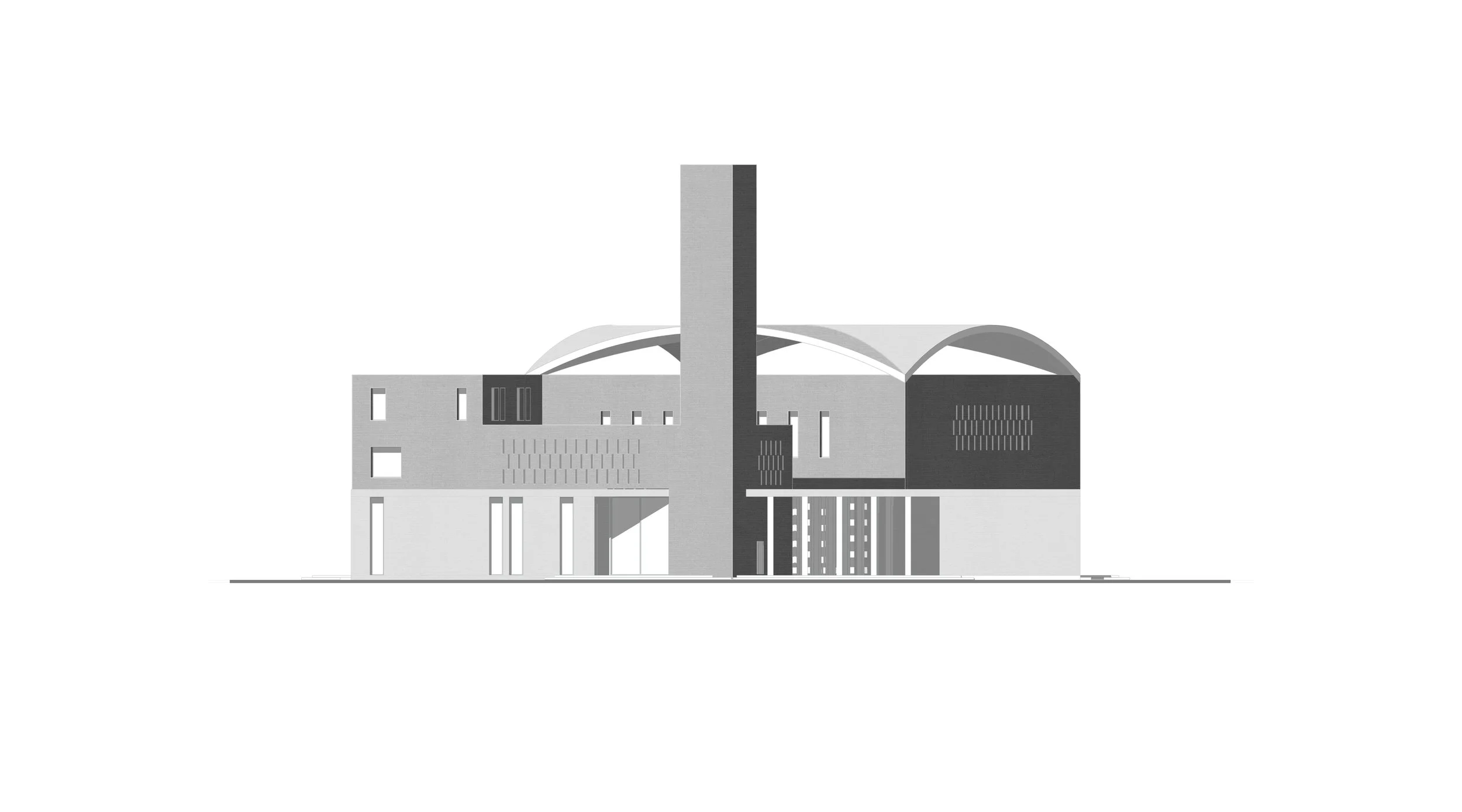
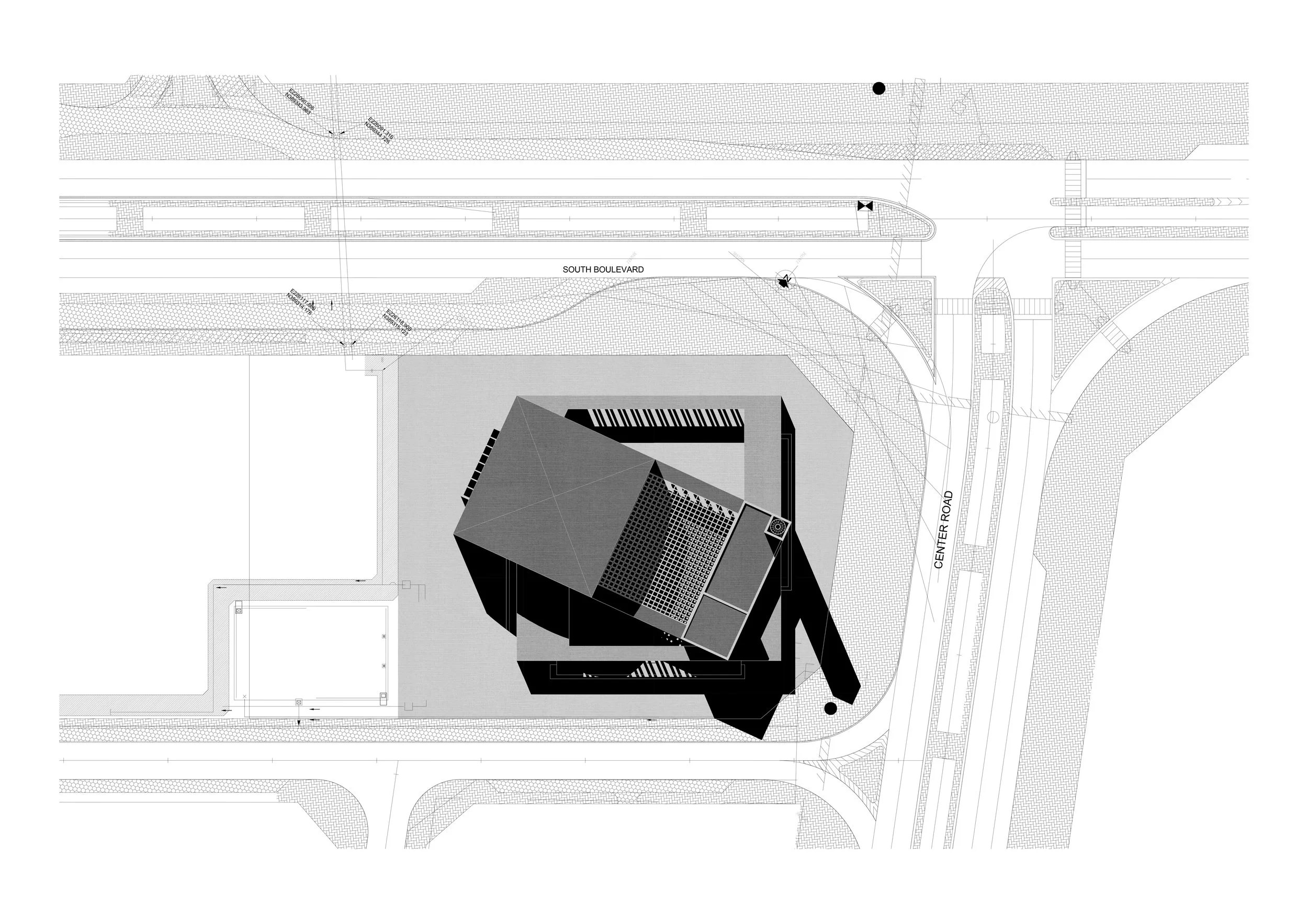
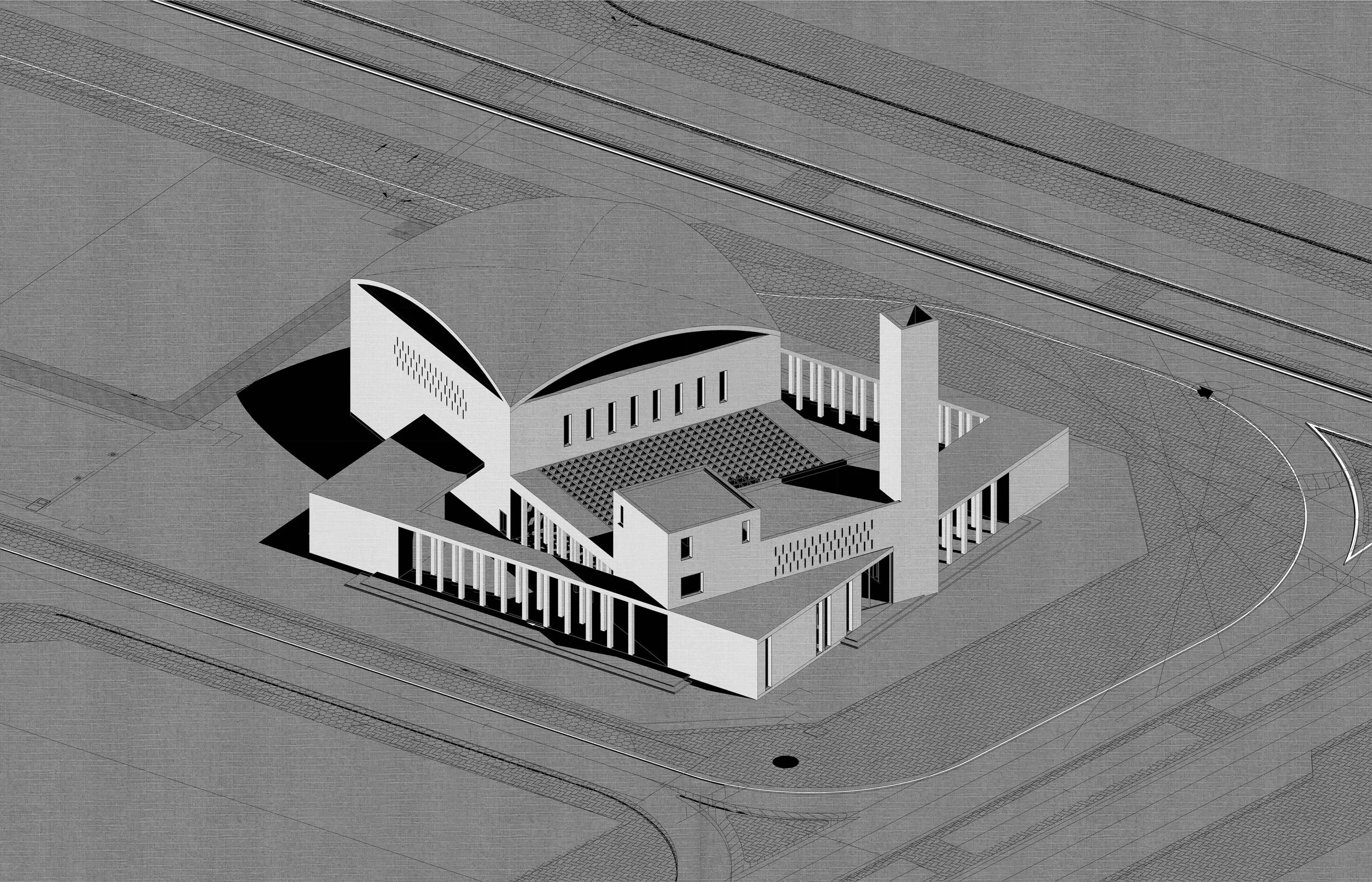
The mosque is shaped by its urban context — three surrounding streets define a disciplined square footprint, grounded in a strict geometric grid of 2.4m × 2.4m. Within this square, a rectangular prayer hall is overlaid, following the classic square and double square proportion — a geometry that echoes both Islamic architectural tradition and the orientation toward Mecca.
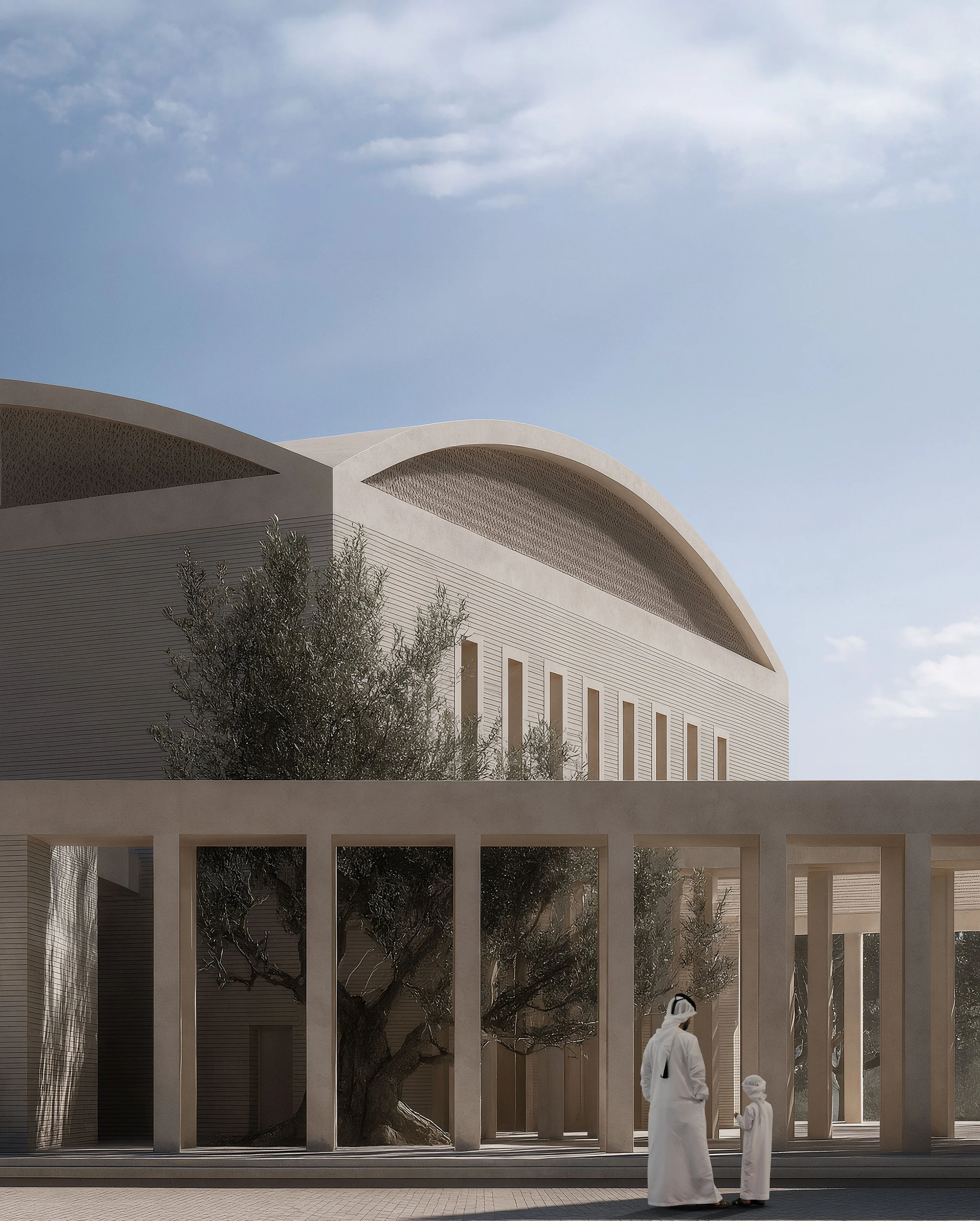
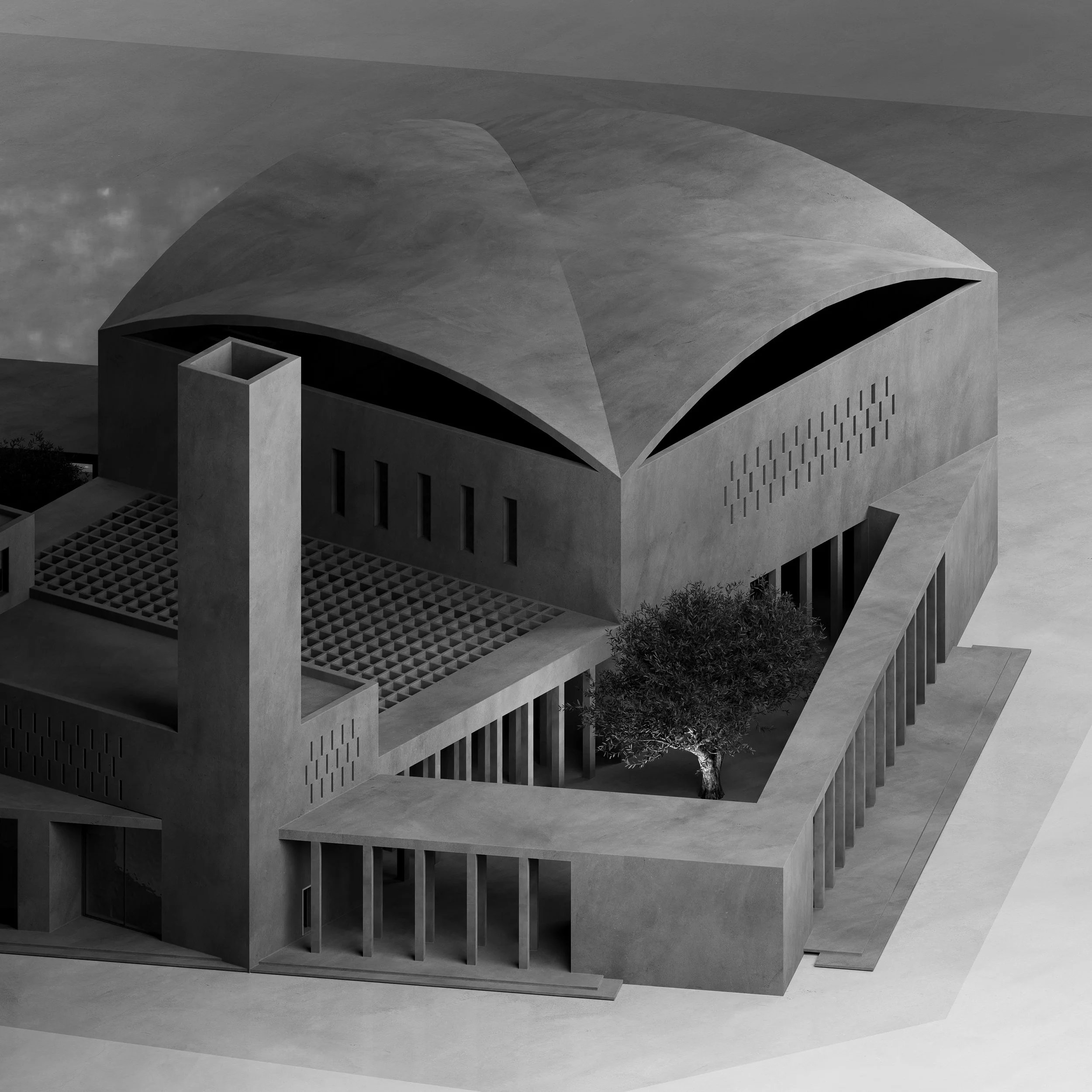
Rather than presenting itself as a monument, the mosque mediates between city and sanctuary through an interstitial arcade — a shaded in-between space that reinterprets the traditional threshold found in historic Qatari mosques. This transitional layer slows the worshipper's movement, preparing the mind and body before entering the sacred interior.
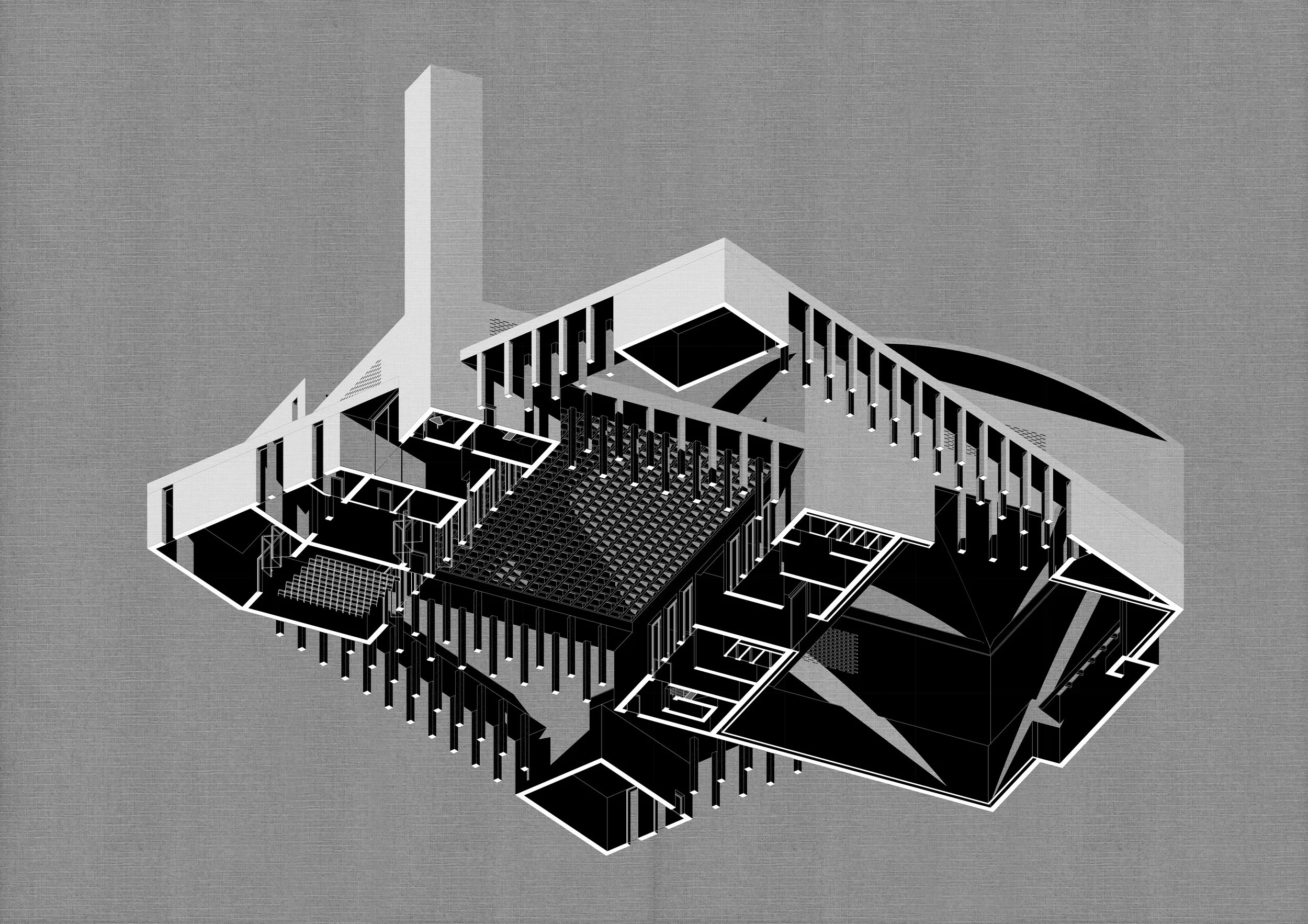
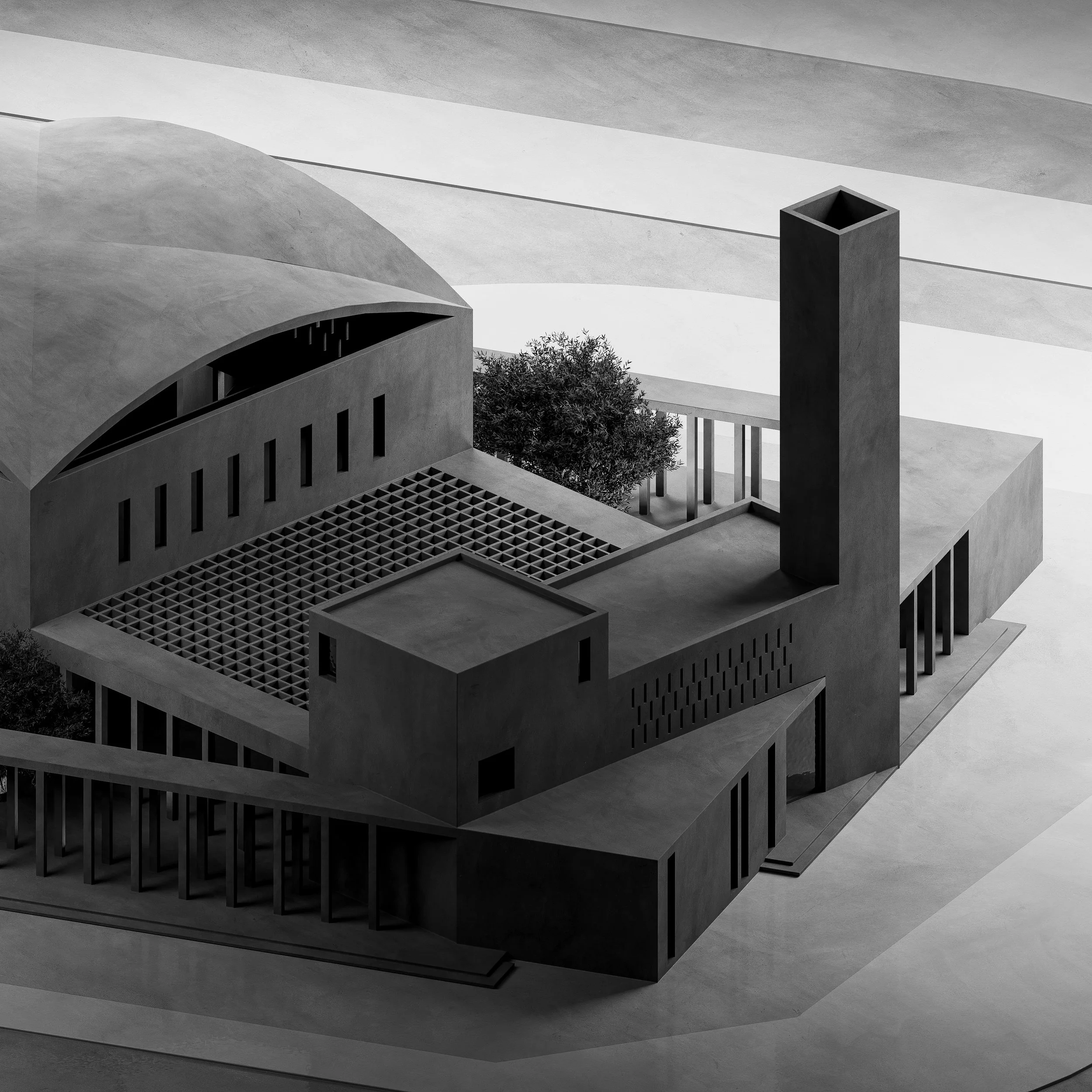
The courtyard, traditionally open, is reimagined here as a shaded, enclosed gathering space — protecting it from the harsh climate while preserving its social and spiritual role as a place of pause and community.
Light, shade, and spatial sequence are the primary architectural tools — not ornament. The architecture speaks through proportion, restraint, and the careful choreography of the worshipper's path.
From Public to Sacred
The design follows a layered spatial journey that transitions from public to sacred, where the interplay of light, shade, and spatial layering guides worshippers through a sequence of transition.
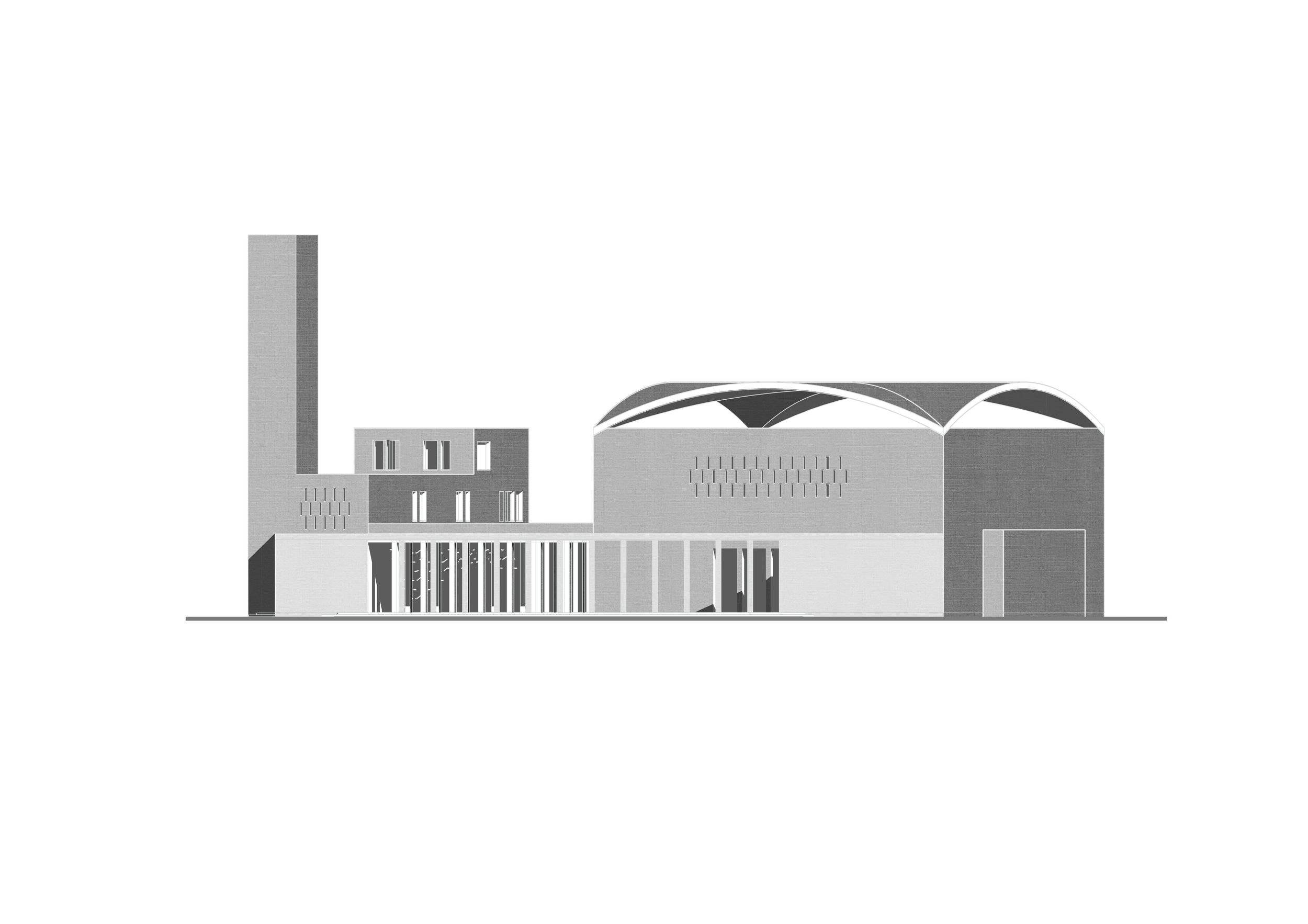
A Contemporary Interpretation of Tradition
The mosque is oriented towards Mecca, with a rectangular prayer hall overlaid onto a square base. Inspired by the simplicity of traditional Qatari mosques, the design reimagines the courtyard as a shaded, enclosed space — enhancing usability while maintaining its role as a place for gathering and transition.
Organizing Proportions
A 29m × 58m rectangle is formed by the overlapping of a 50m × 50m square within the composition — a deliberate geometric discipline that governs the entire layout. The planning is geometrically organized on a 2.4m × 2.4m grid, while proportions follow the square and double square principle.
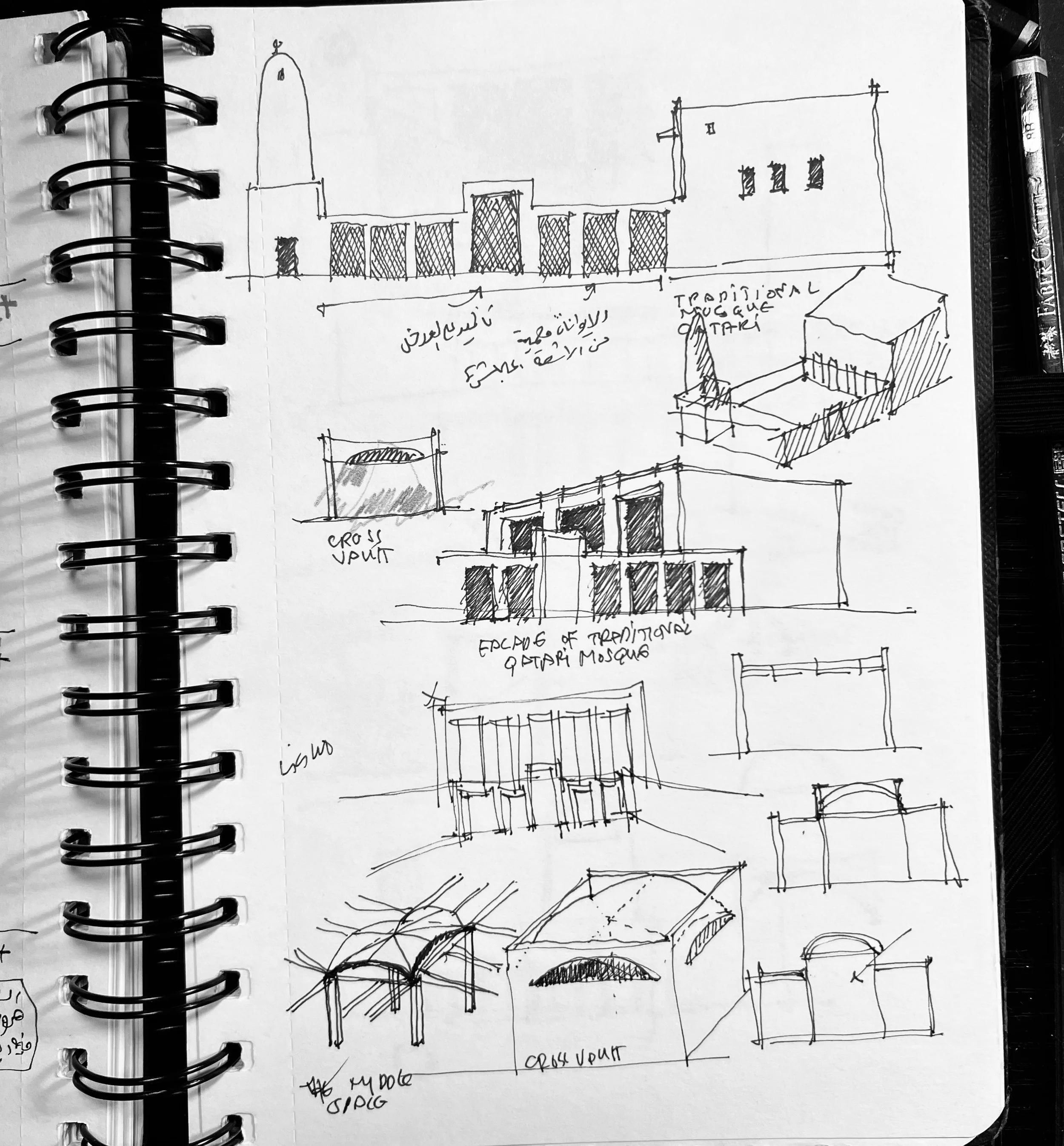
Exploring the traditional mosque architecture in Doha
The traditional mosques of Doha are defined by quiet simplicity — pure geometric volumes, thick walls with minimal openings, and a restrained material palette that responds honestly to the desert climate. At their heart lies a modest courtyard, acting as a breathing pause between the city and the prayer hall, filtering light and movement before the worshipper crosses into the sacred.
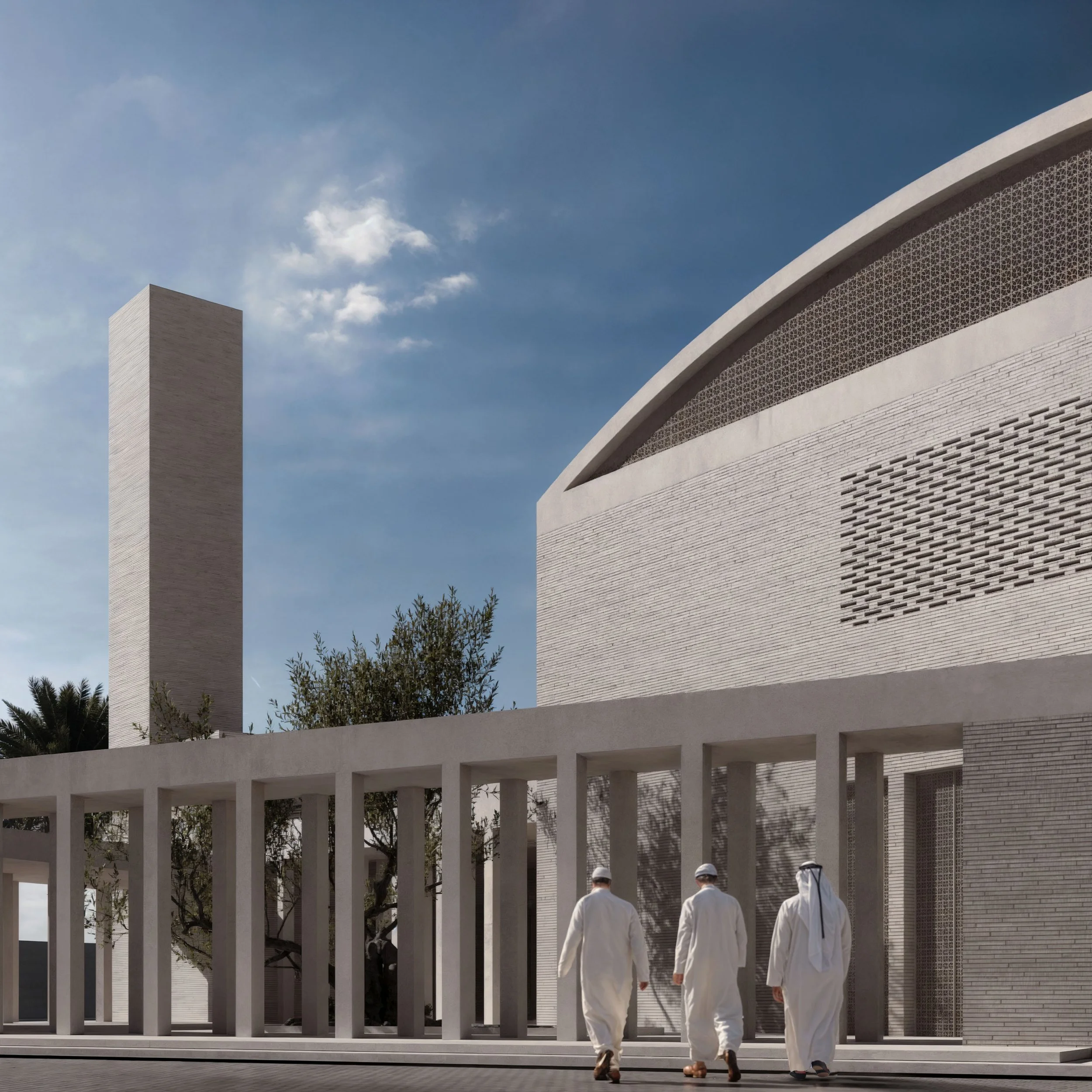
The courtyard is a shaded, enclosed gathering space
The courtyard, traditionally open, is reimagined here as a shaded, enclosed gathering space — protecting it from the harsh climate while preserving its social and spiritual role as a place of pause and community.
Shaped By Its Context
The mosque's layout is defined by the three surrounding streets, forming a clear square base. An interstitial arcade punctuates the façade, guiding movement while creating a shaded transition space — a reinterpretation of the traditional threshold between inside and outside.
Layout
Ground floor plan
Second floor plan