Bait Al Mulla___Doha
Bait Al-Mulla_Qatar
-
Doha, Qatar
-
Land area 3000 sqm, Total buit-up Area 1600 sqm
-
Traditional Qatari House | Program Strategy
Four Independent Zones Within a Unified Courtyard System
The house is organized into four distinct zones, each functioning as a self-sufficient living unit with its own amenities, ensuring privacy and flexibility for extended family living. These zones typically include private bedrooms, living areas, and dedicated service spaces, allowing each household to operate independently.
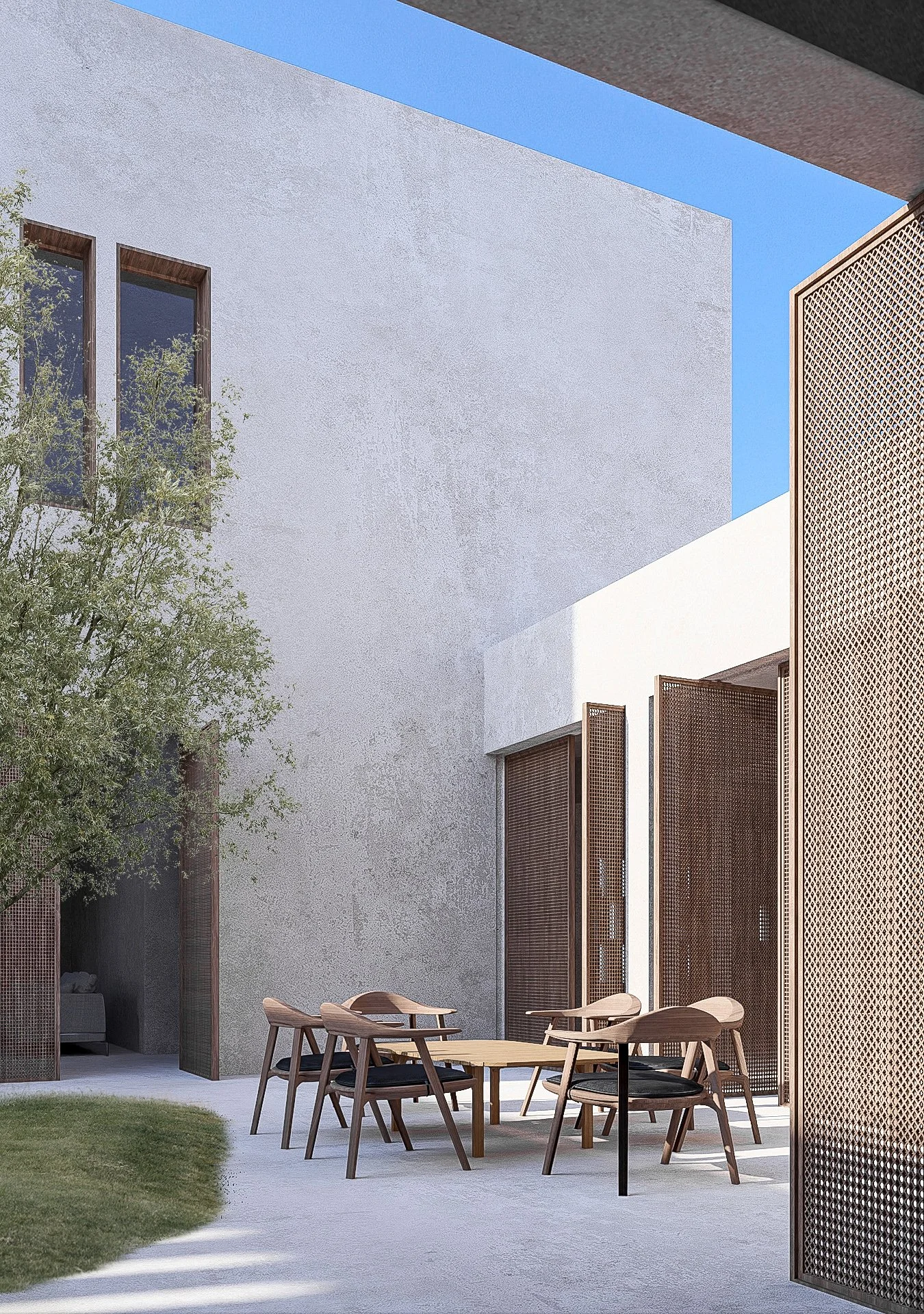
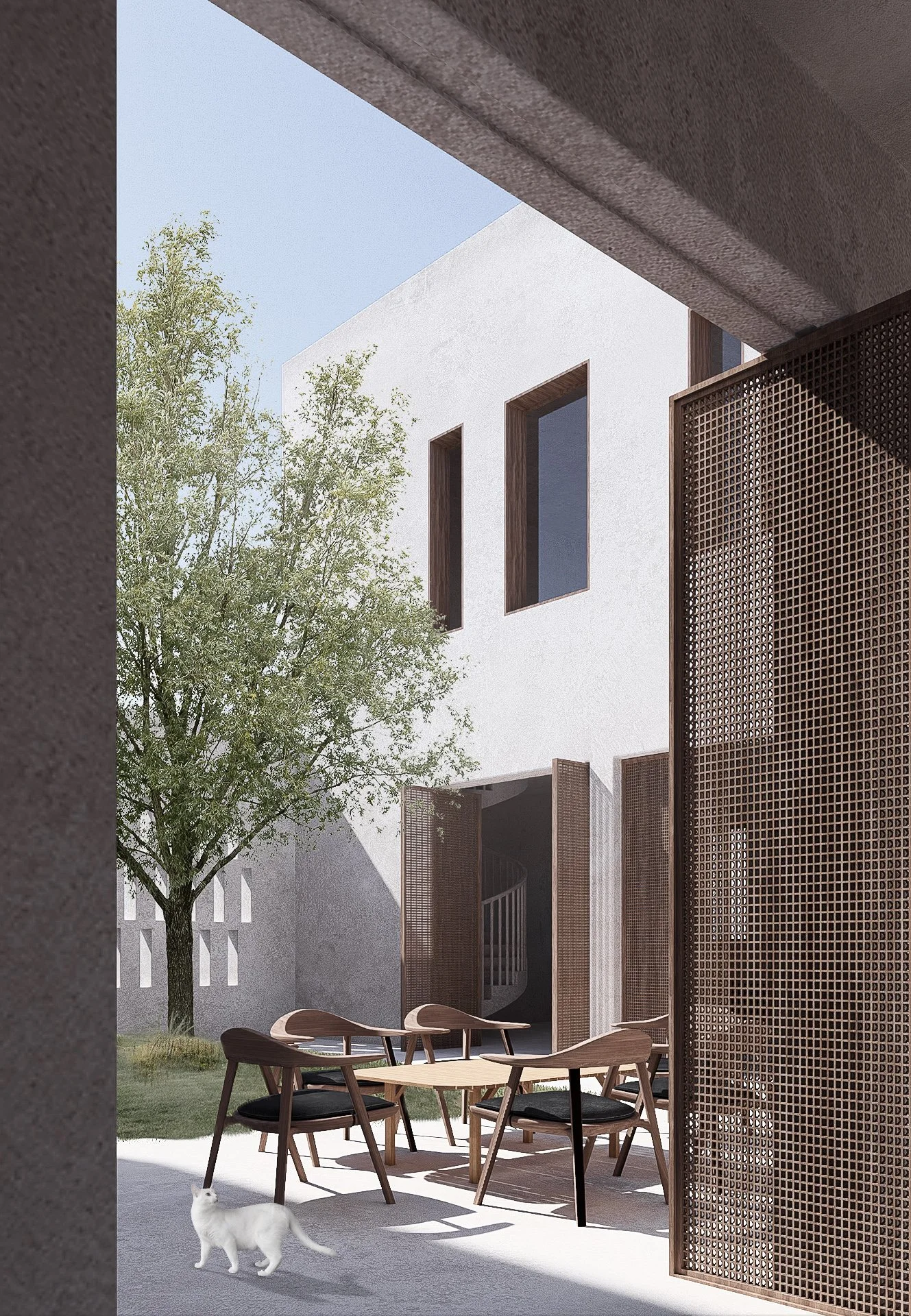
All four zones are arranged around a shared central courtyard, which acts as the social and environmental heart of the house. This collective space fosters interaction, strengthens family bonds, and enhances natural ventilation and shading. Transitional elements such as arcades and shaded corridors connect the zones, creating a gradual shift between private and communal areas.
-
A Living Courtyard House Rooted in Climate, Culture, and Continuity
Bait Al-Mulla reinterprets the traditional courtyard house for Doha’s climate and social fabric, aiming to create a living, adaptable home. At its core lies a shaded central courtyard—an intimate haven that organizes spatial relationships while enhancing natural ventilation and soft daylight.
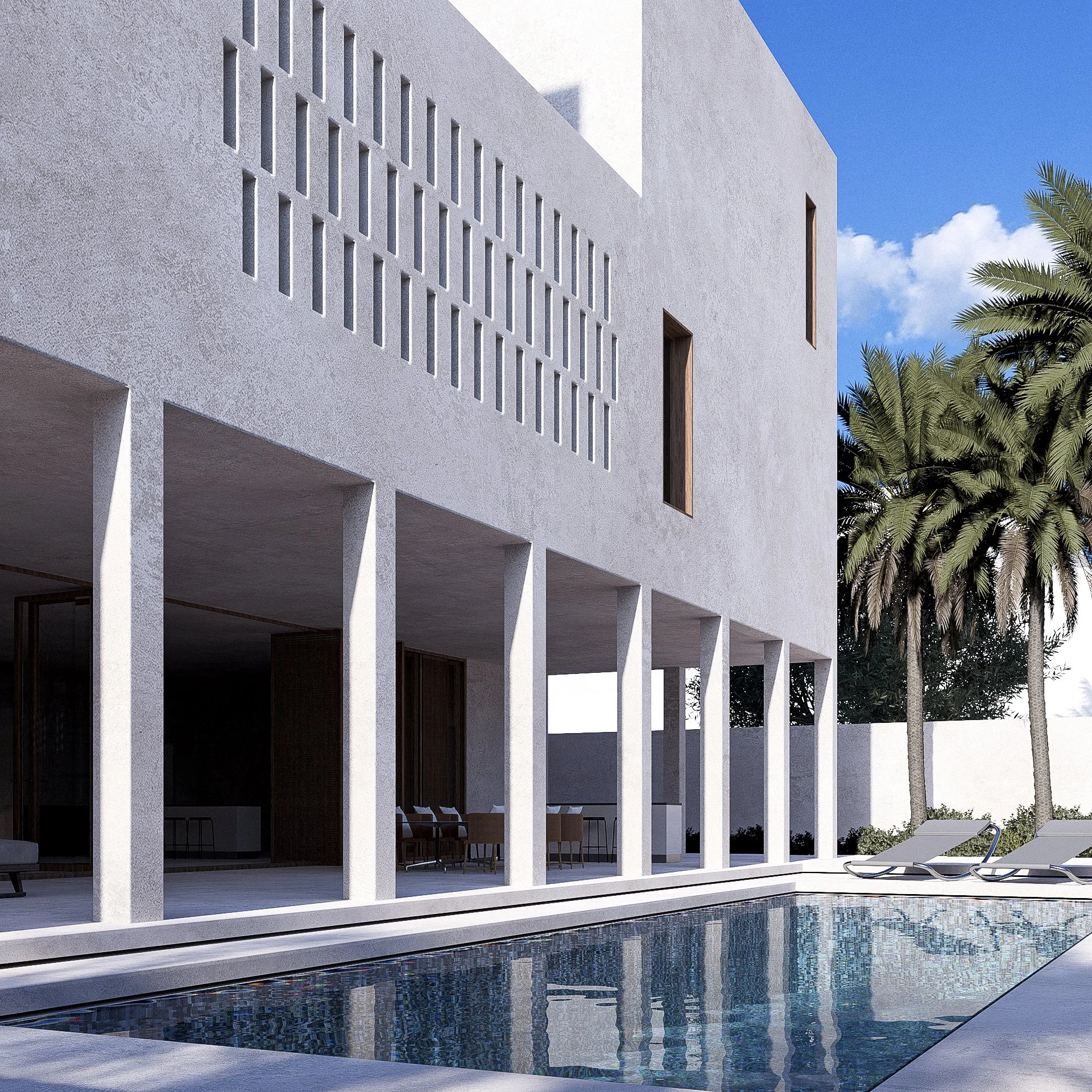
A continuous arcade along the eastern façade forms a protected, open-air promenade that mediates between الداخل والخارج, guiding movement toward the courtyard. This transitional space, together with a mesh-covered courtyard, reduces heat gain while maintaining airflow and visual permeability.
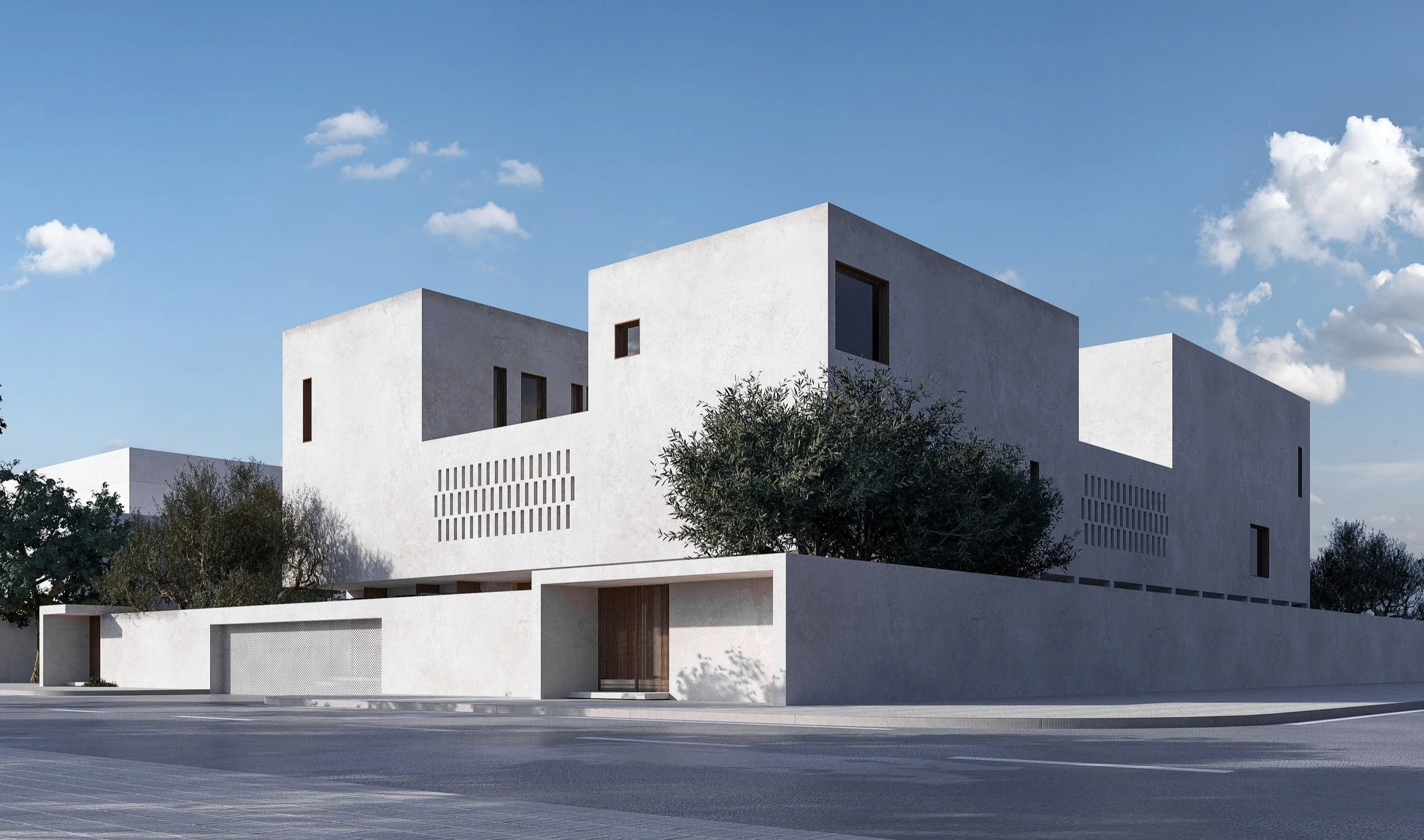
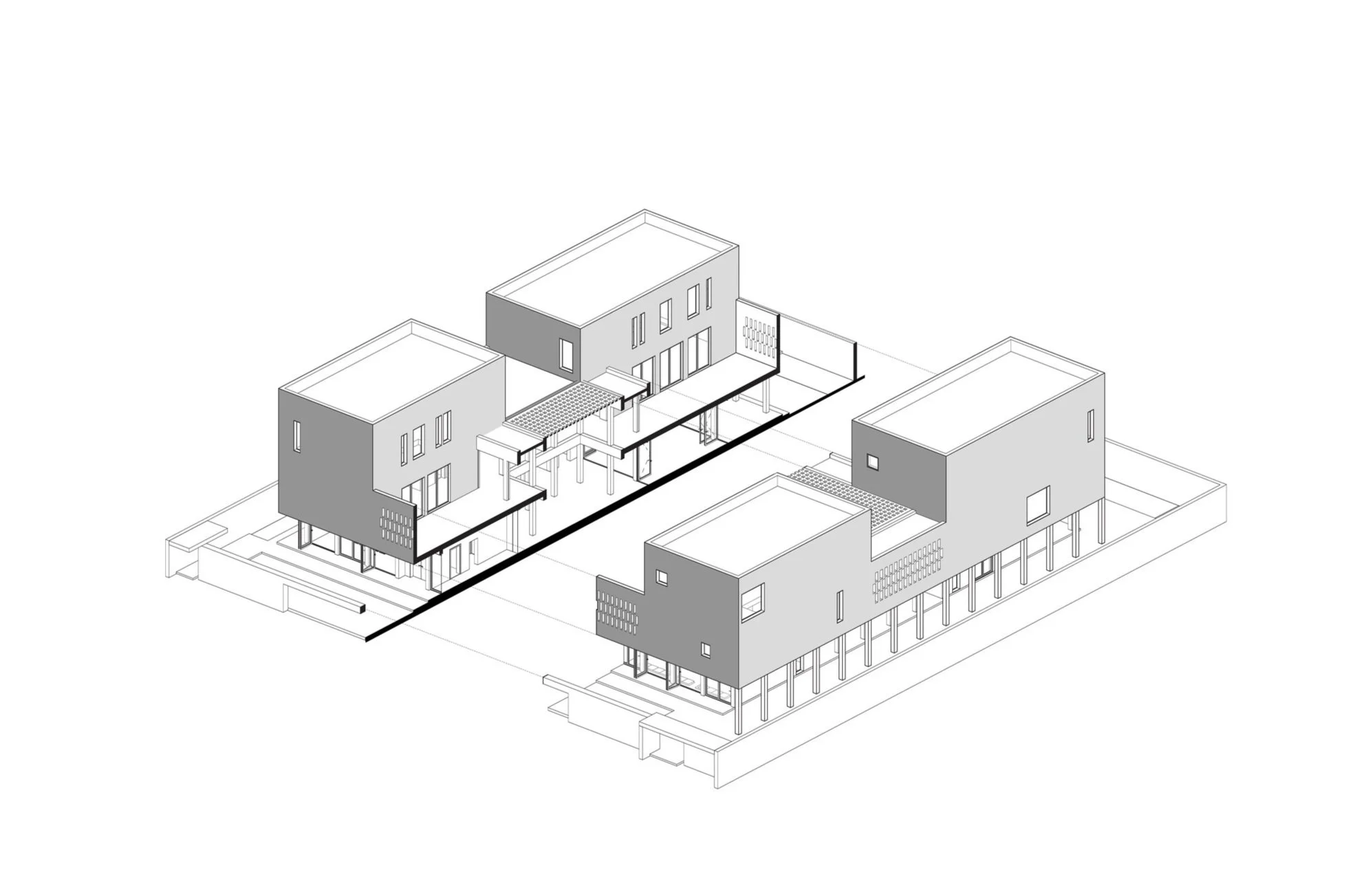
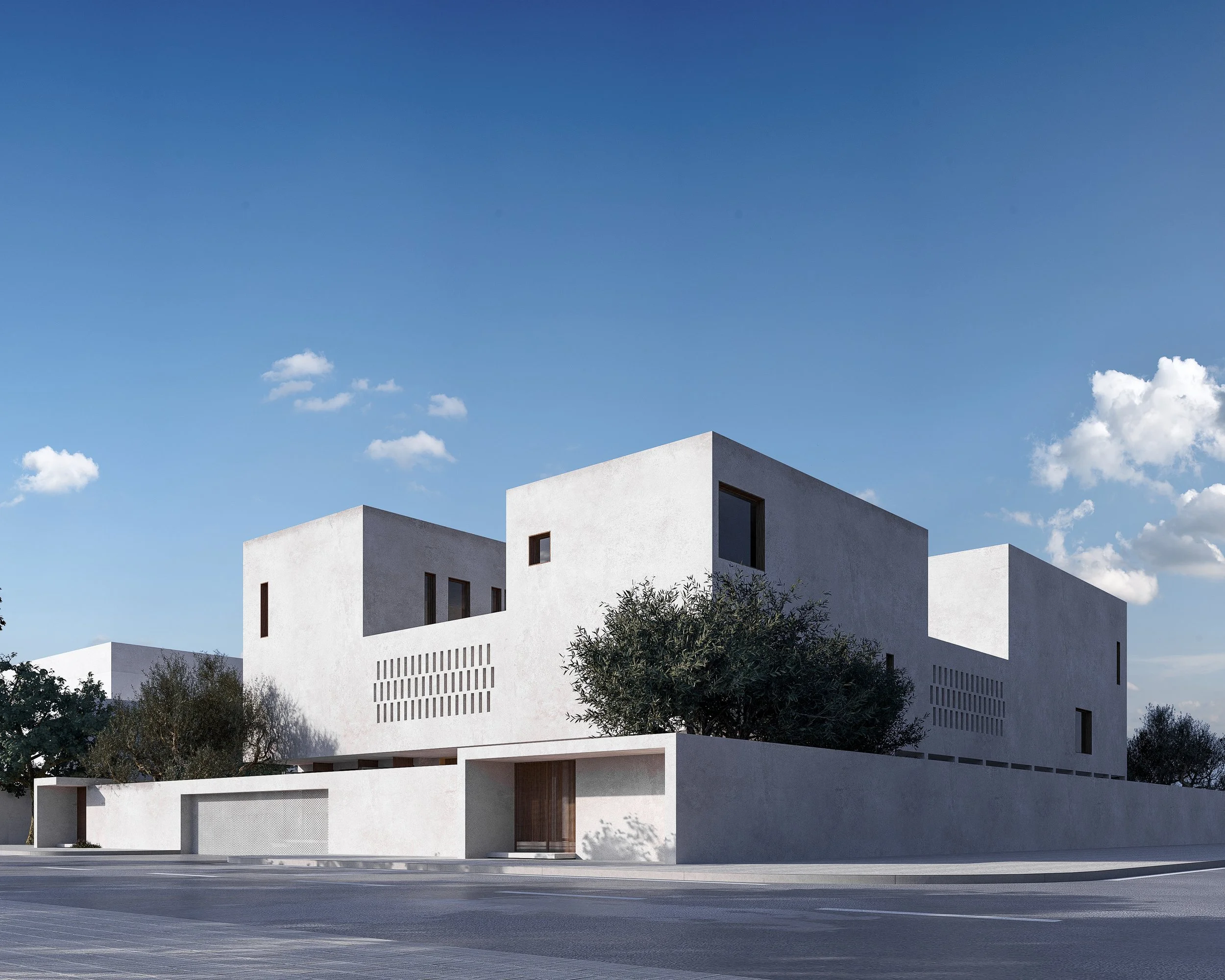
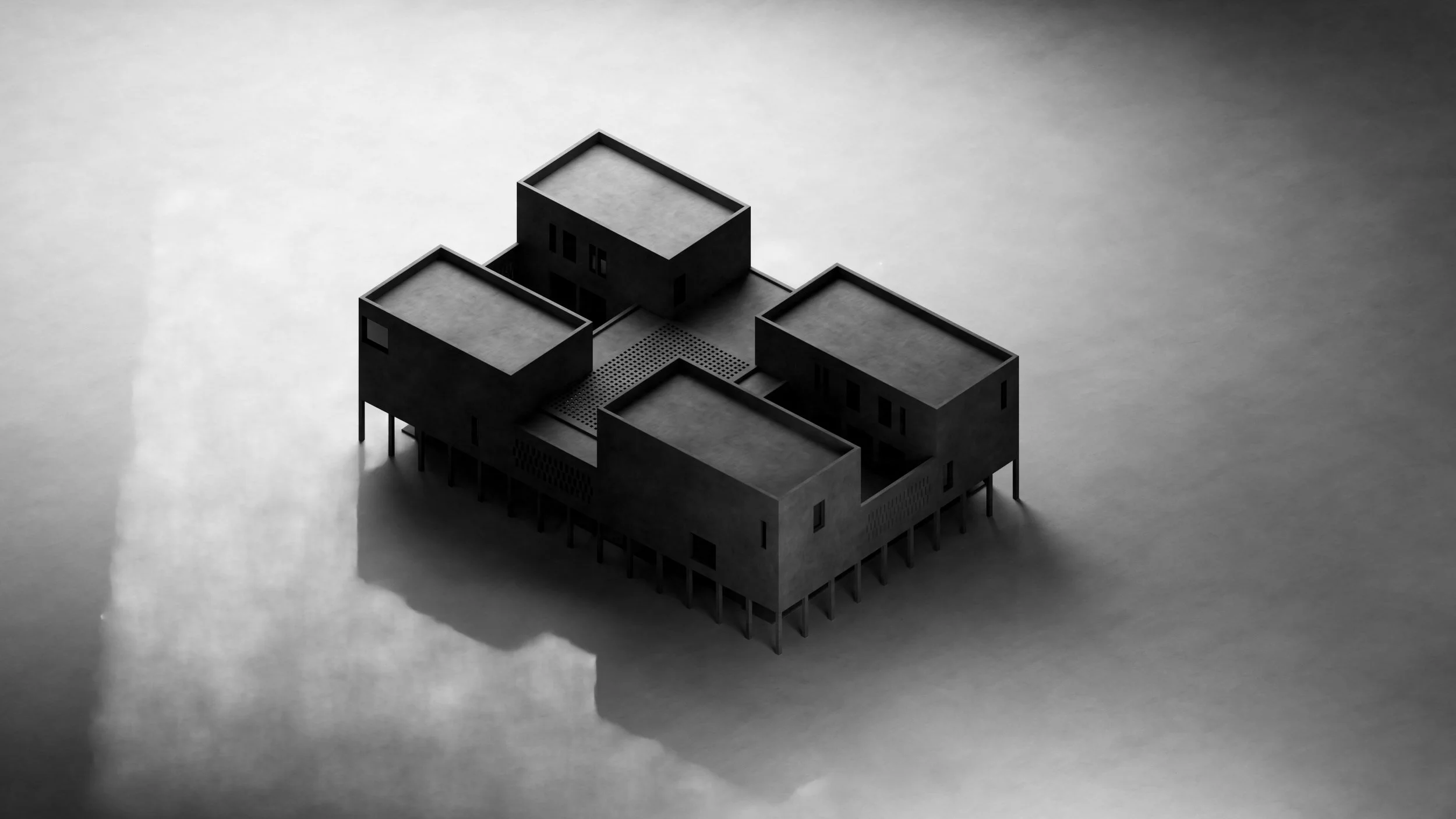
The house is structured on a 9-square grid, with four two-story masses positioned at the corners like protective towers. These volumes open inward toward a raised central space, reinforcing privacy while fostering internal connectivity. Carefully controlled external openings shield the house from harsh climate conditions, while internal voids and low-level apertures promote cross-ventilation.
Designed for flexibility and multi-generational living, each tower can evolve into independent living units or interconnected family spaces. The result is a contemporary home that balances tradition and adaptability—anchored in its environment, yet responsive to future change.
A house shaped by the Gulf’s tradition, and climate adaptation — an attempt to make it truly alive.
In the Gulf region, the courtyard house has long been a space of deep intimacy—its central void offering privacy, comfort, and connection to nature. Surrounding it, the arcade stands as one of the most beautiful transitional spaces, used for centuries to create shade, rhythm, and movement between inside and out.
This design is an attempt to rethink the relationship between figure and ground, drawing from these traditions to explore new ways of inhabiting space.
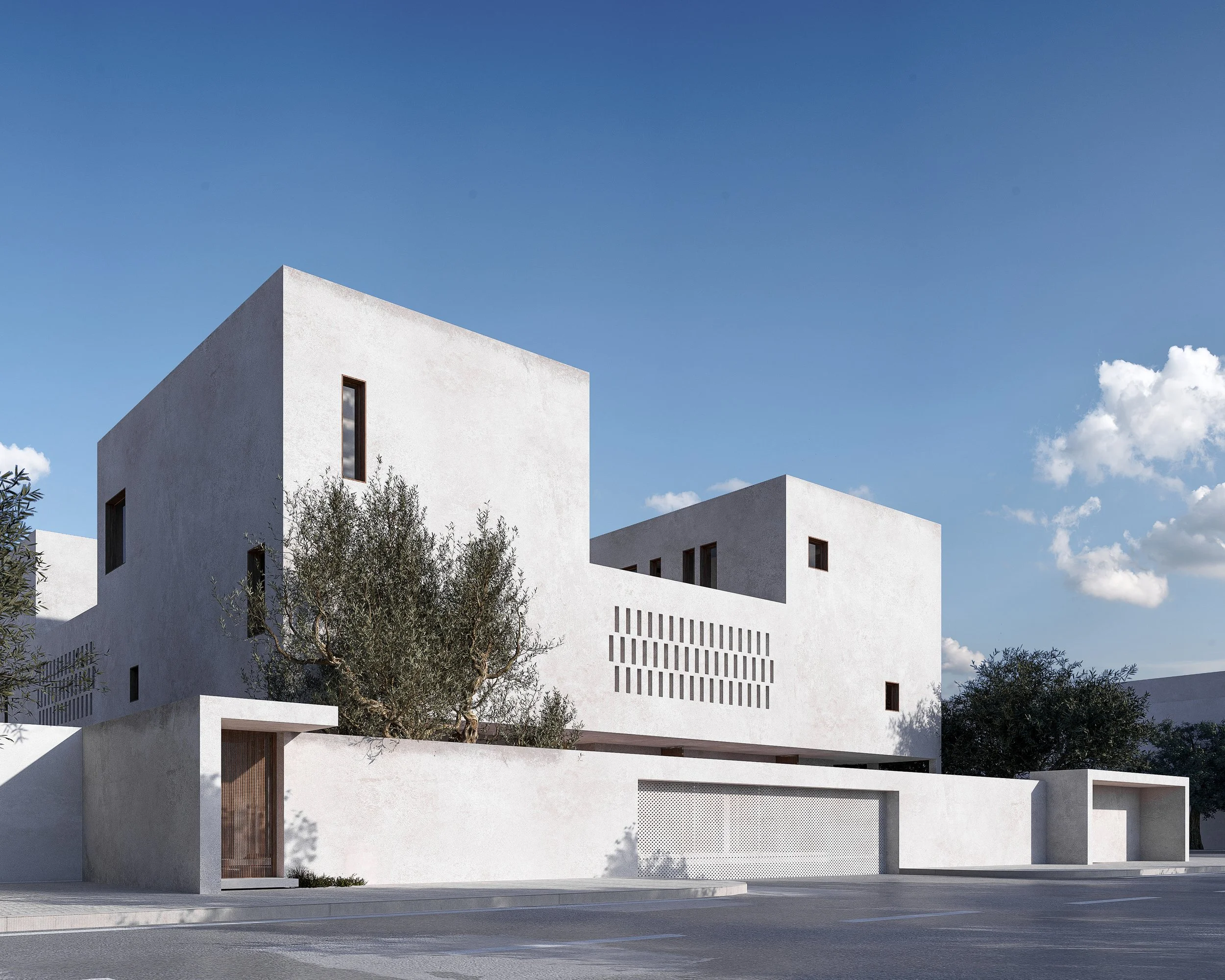
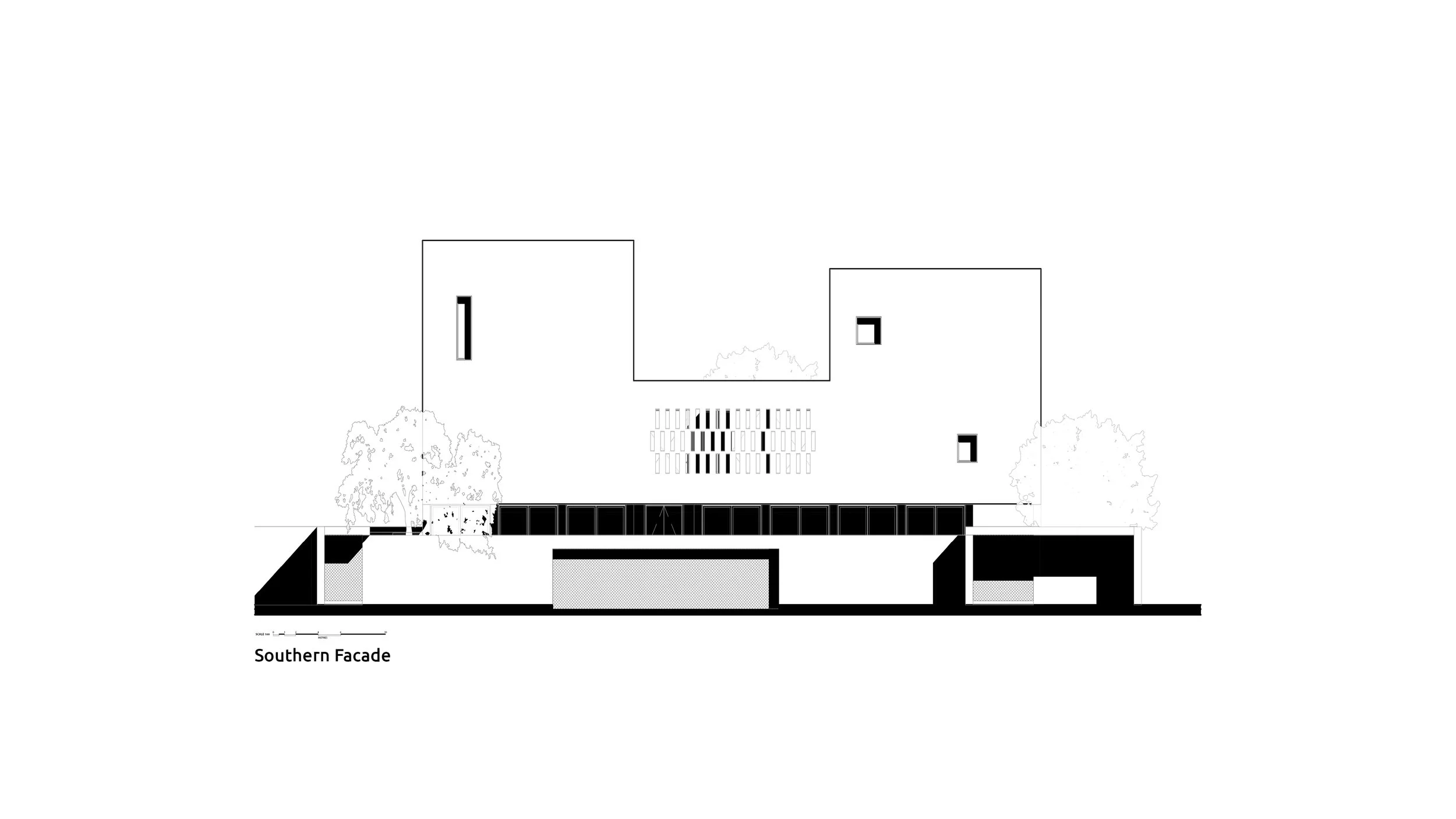
The House is oriented to the inside, balancing privacy and openness
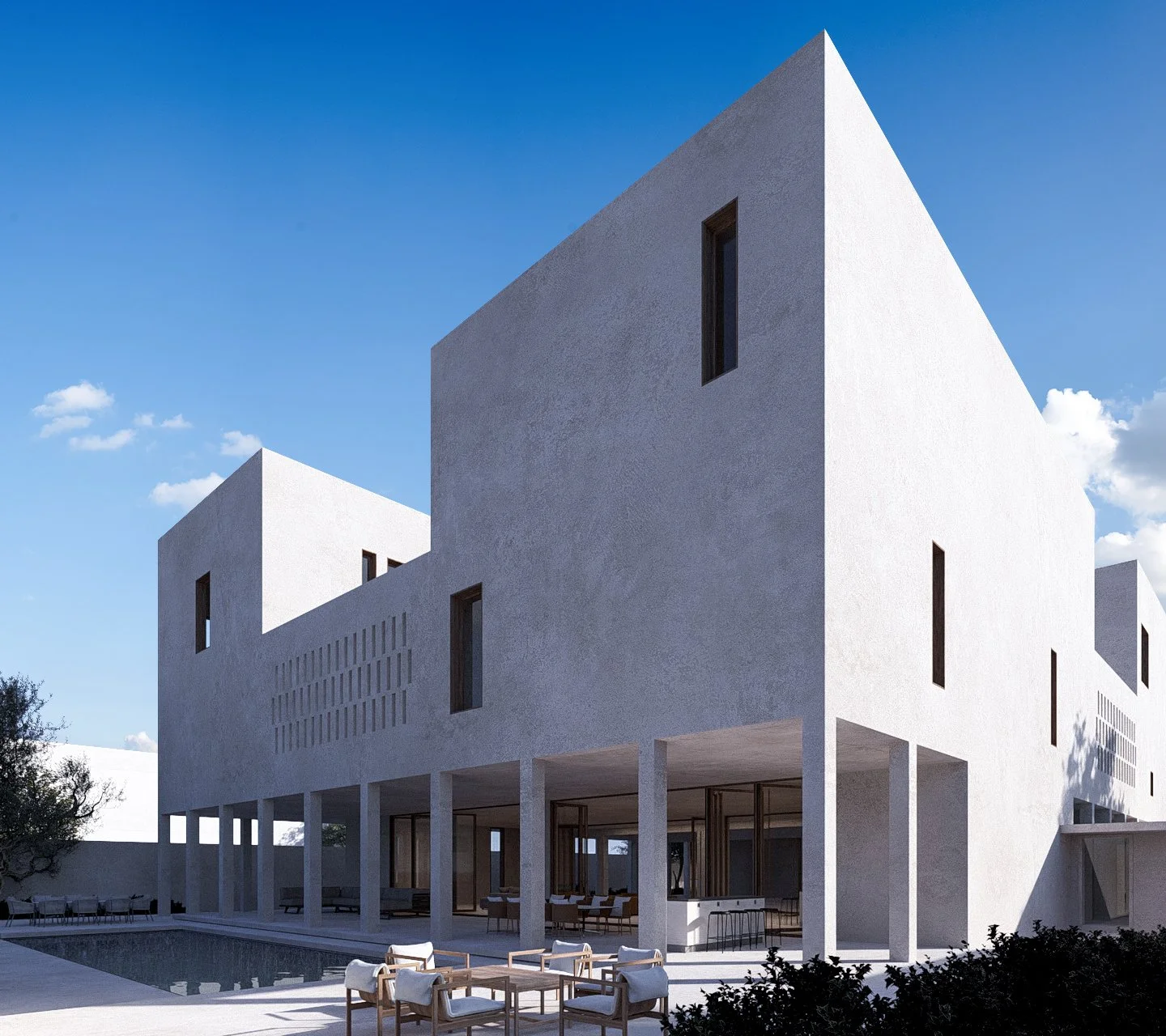
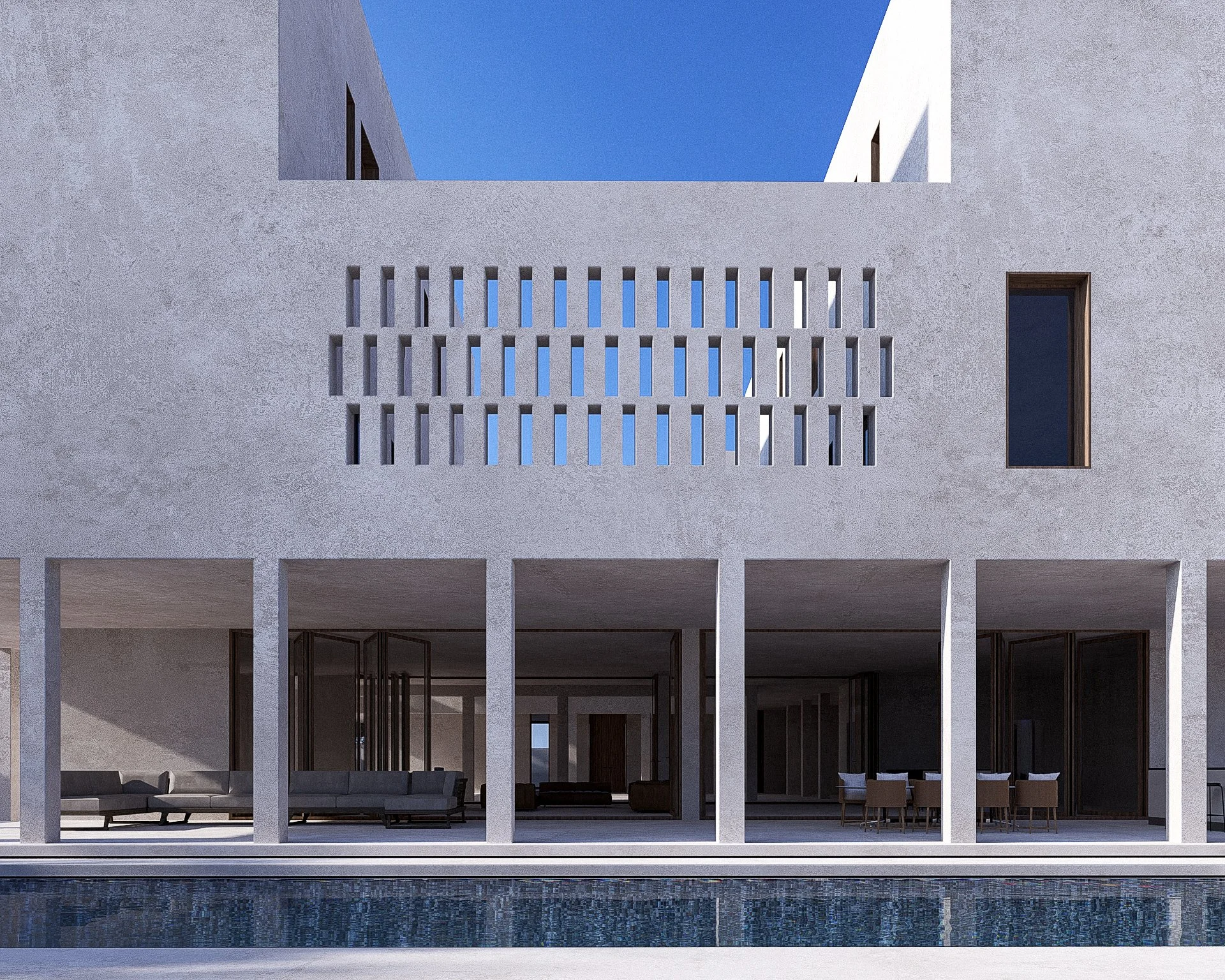
The two-story house, elevated on arcades from the eastern side, features four tower-like volumes at the corners of a 9-square grid, so at its heart lies a central courtyard.
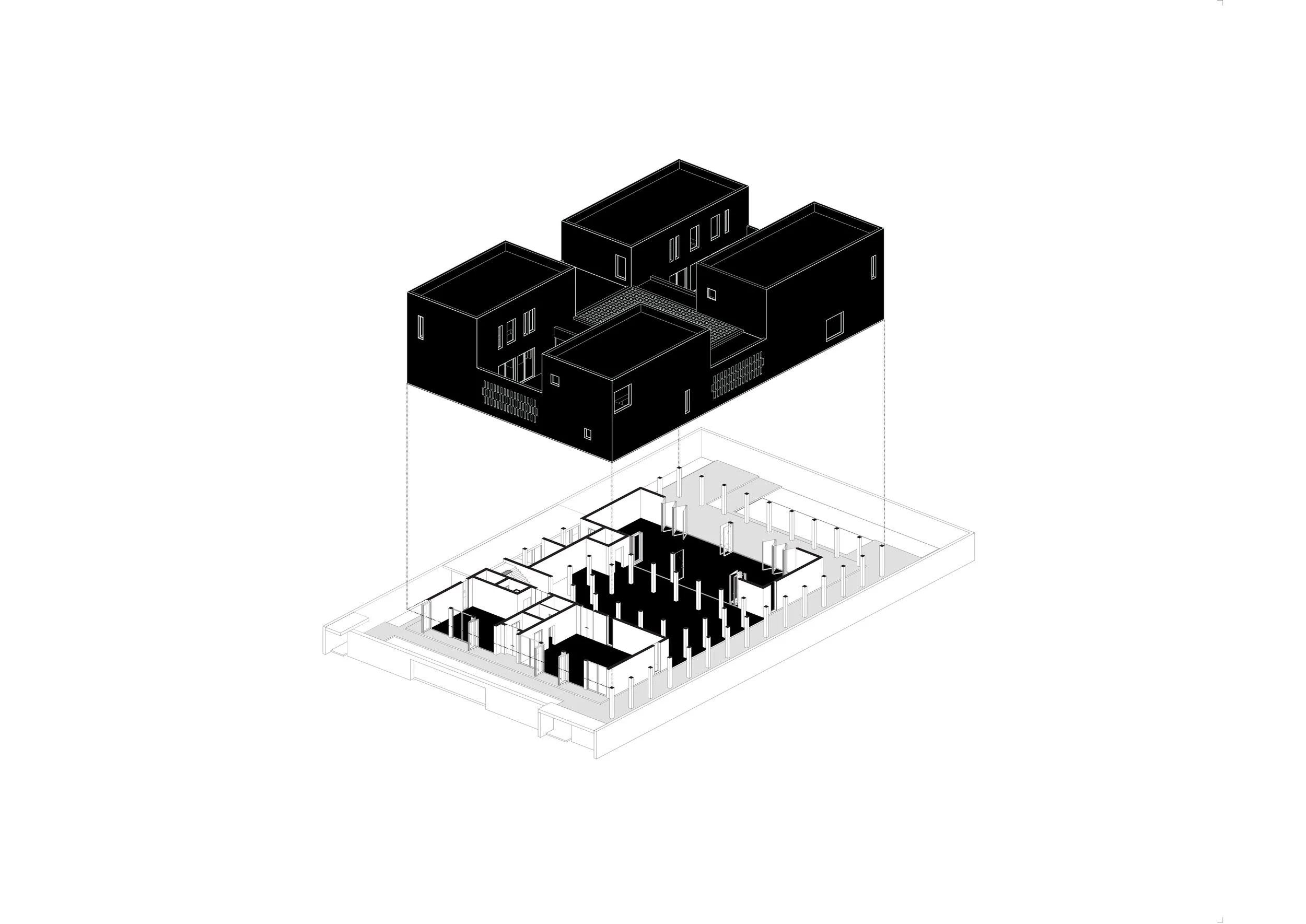
Four towers anchor the corners of a 9-square grid centered around a shaded central courtyard.
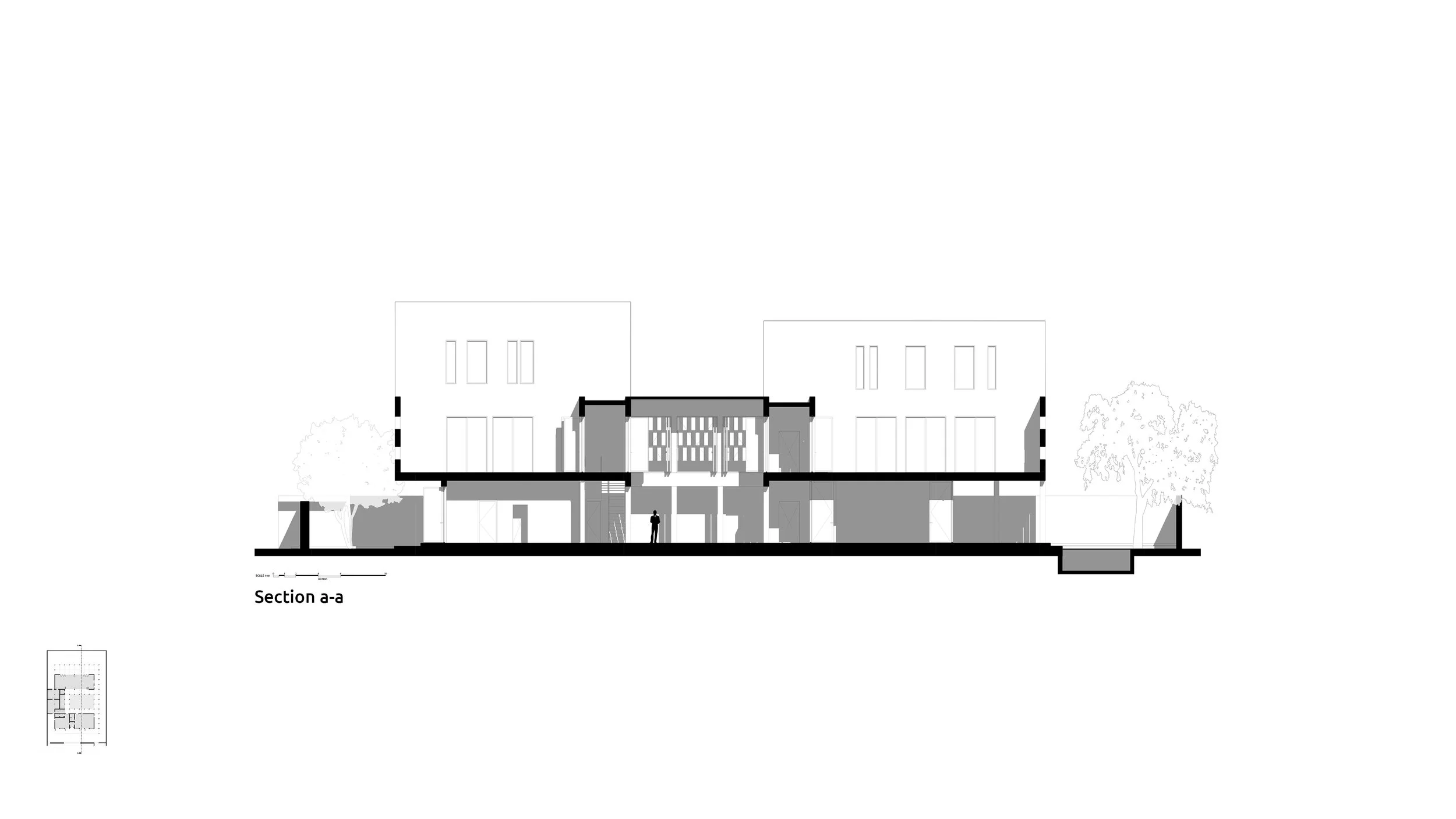
The central courtyard, proportioned in a square and two-thirds ratio, connects to an open family living room centered on vertical circulation and discreetly tucked behind the service area.
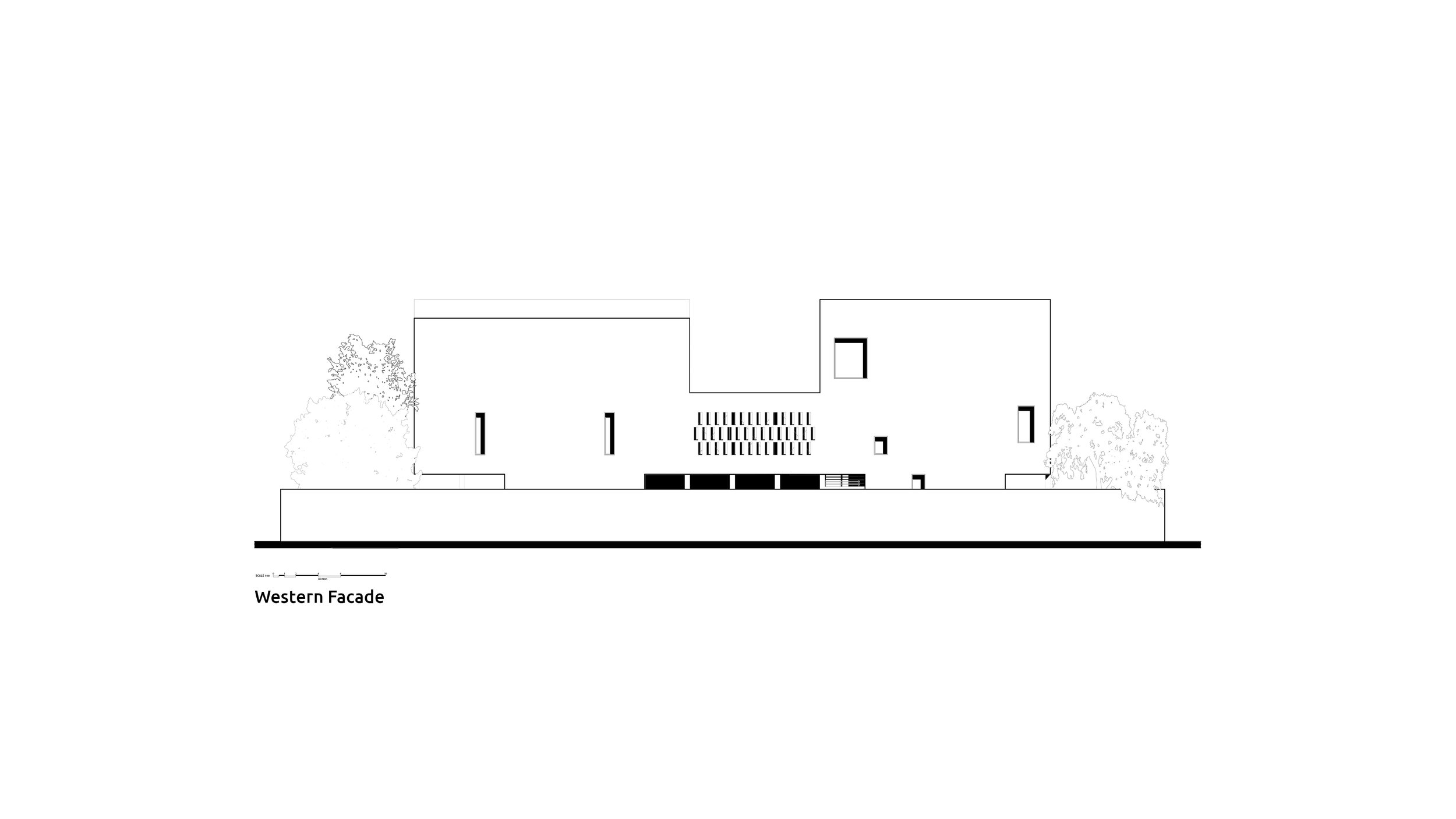
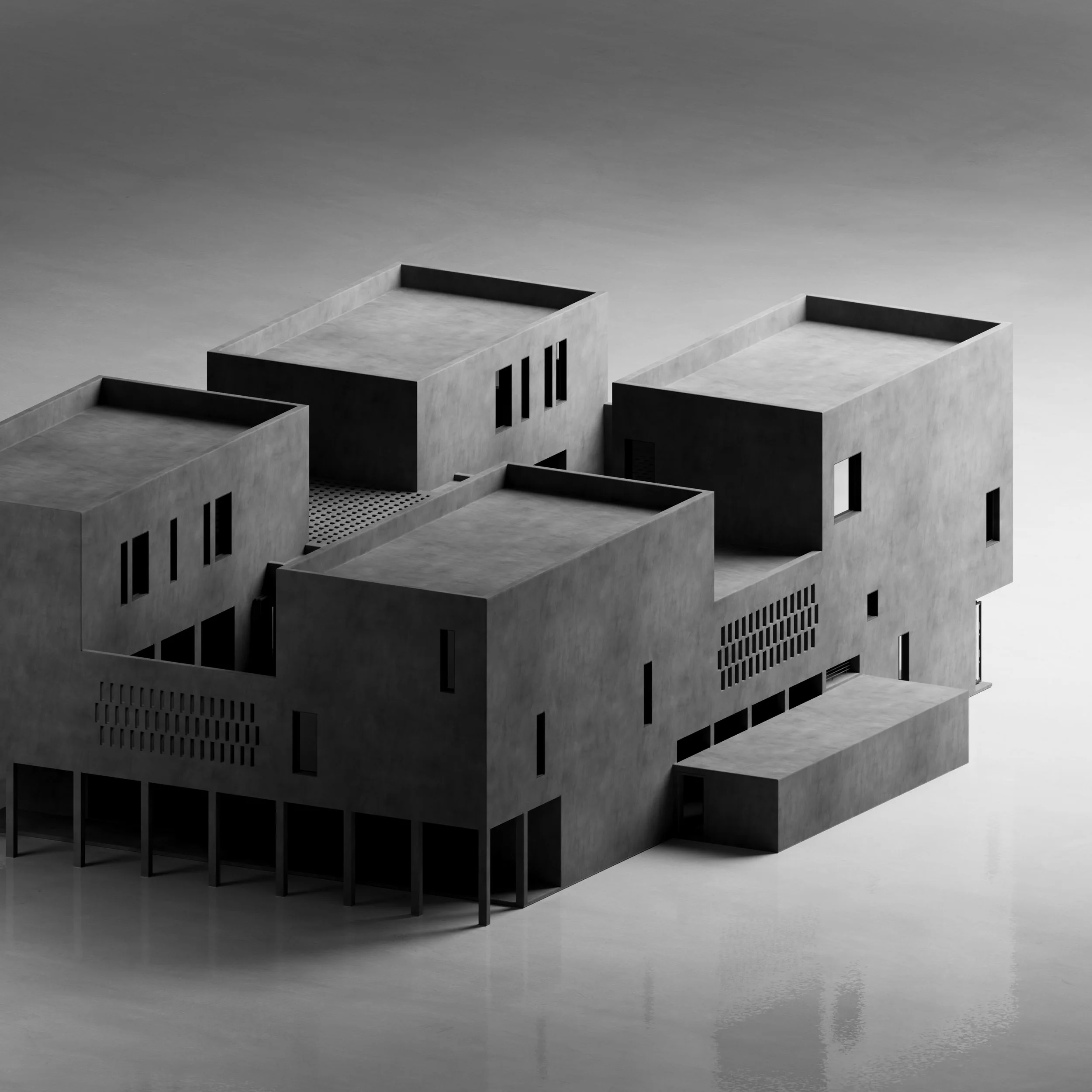
Strategic Openings & Shaded Transitional Spaces
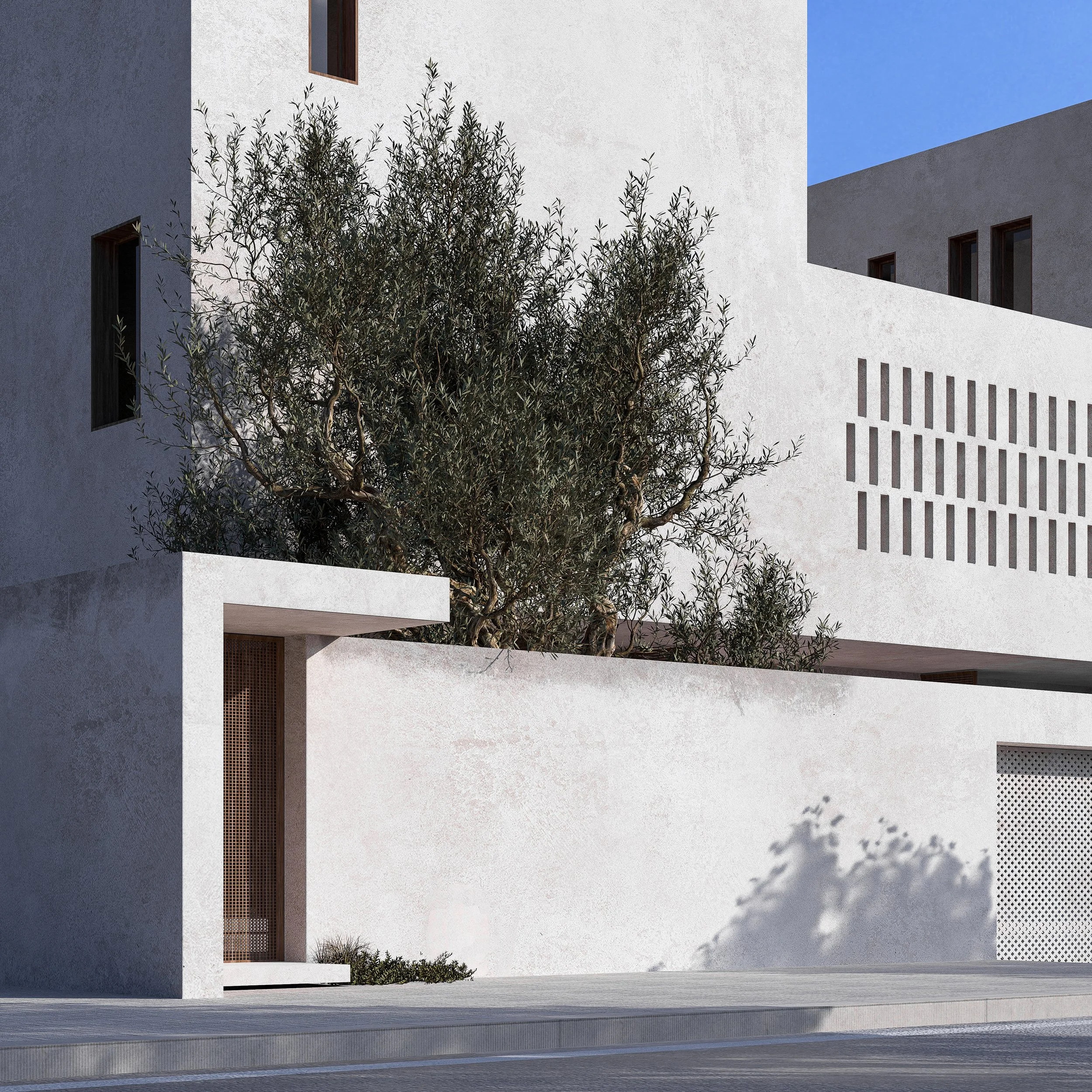
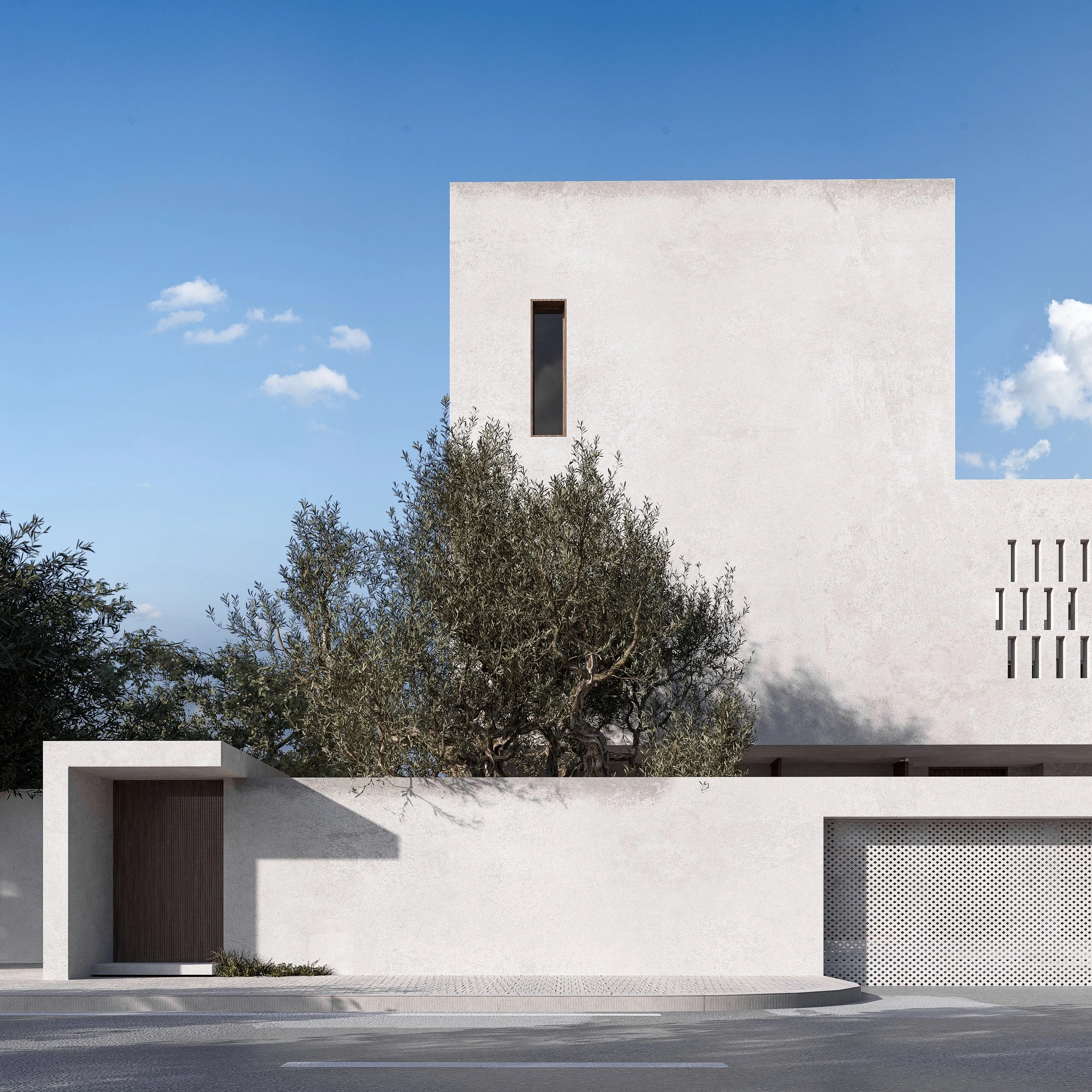
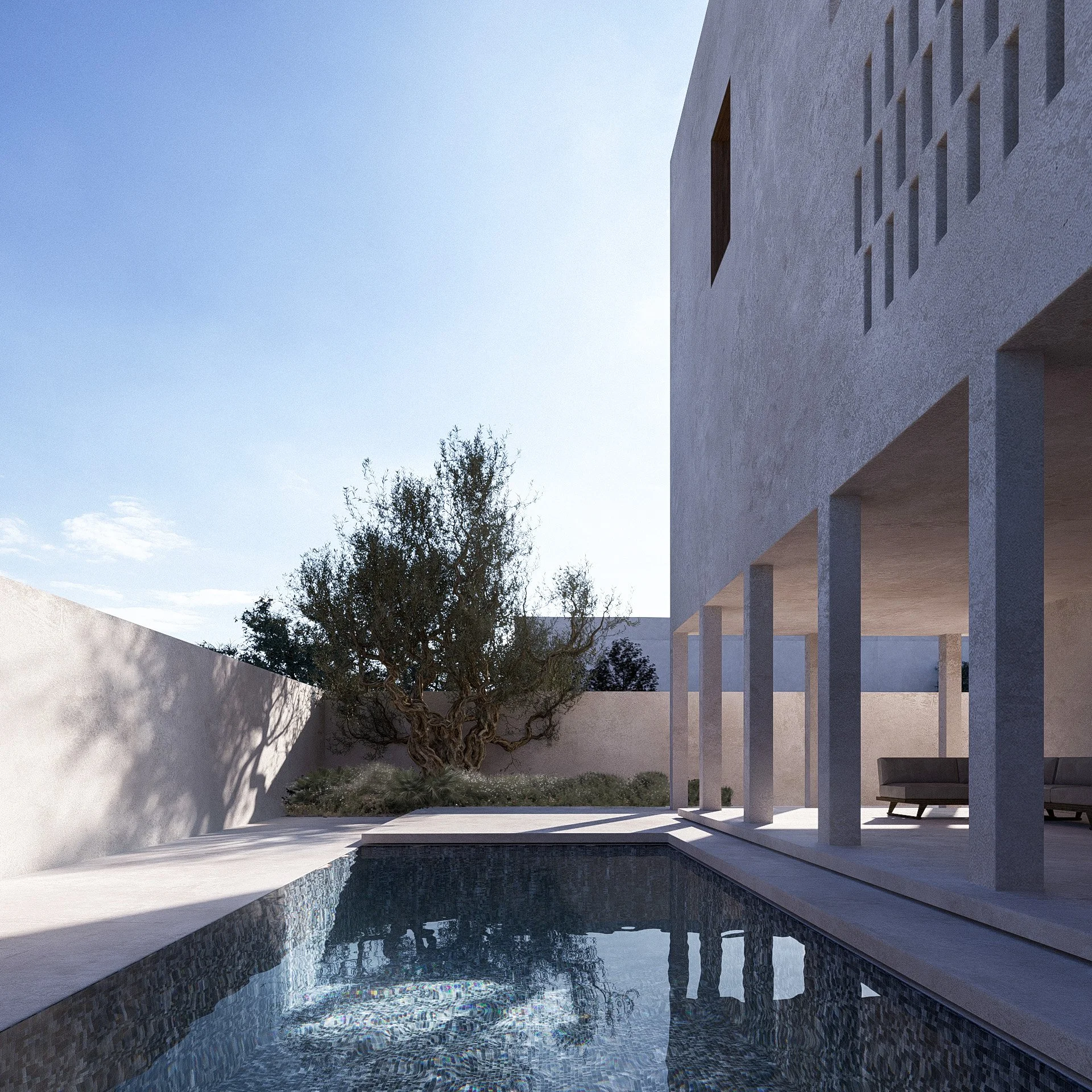
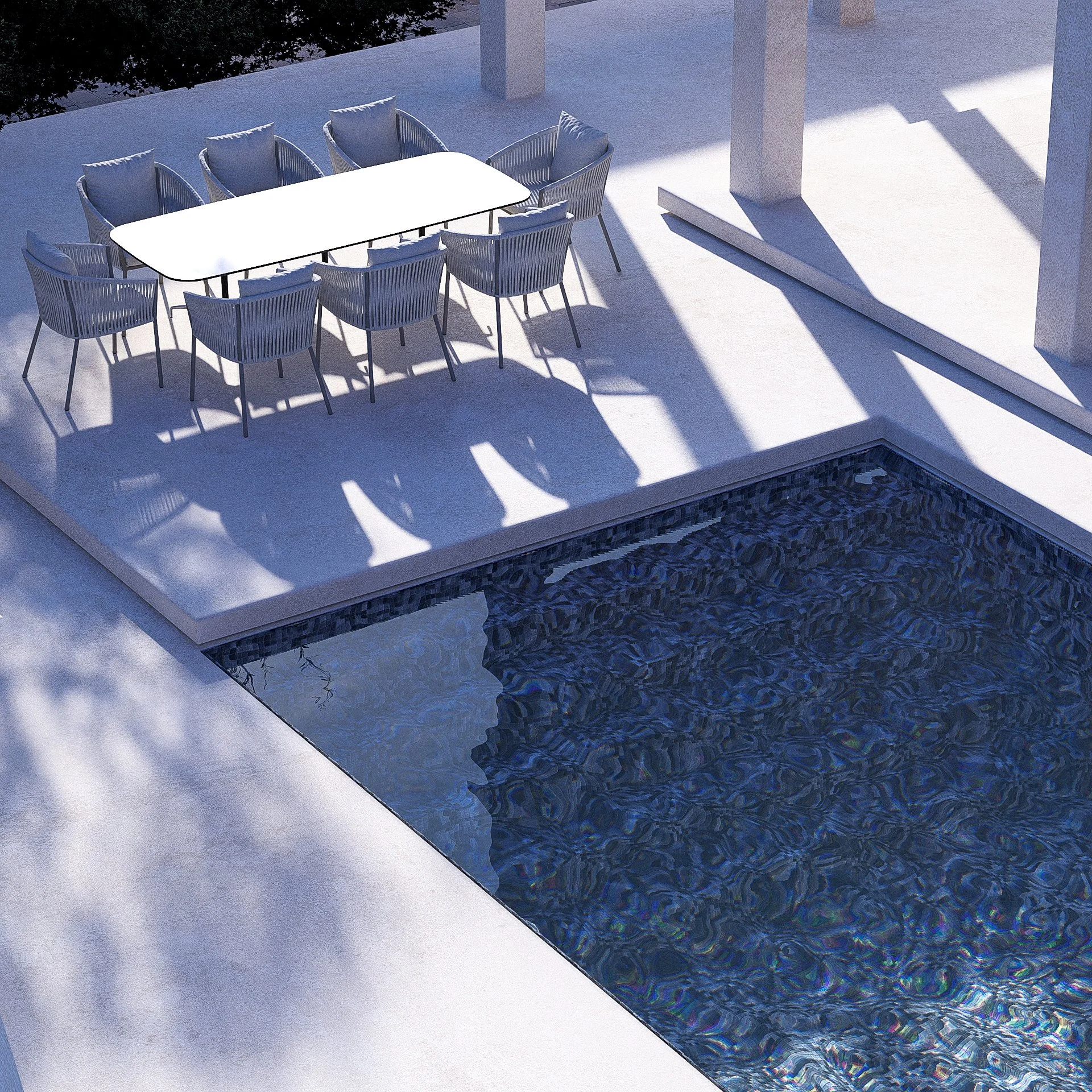
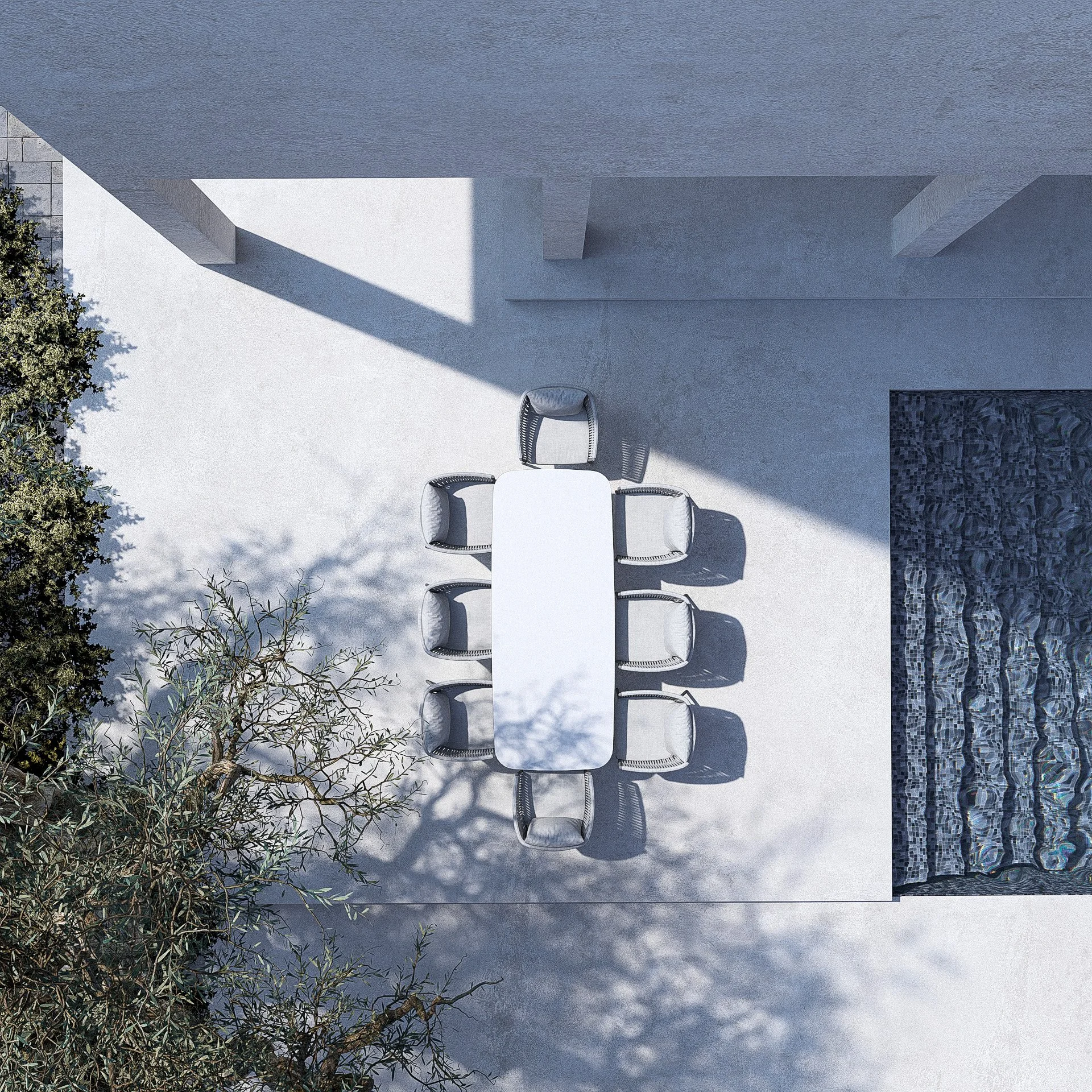
The design connects indoor and outdoor environments through carefully positioned openings that enhance natural ventilation while minimizing daytime thermal gain. The arcade, defined by a series of columns supporting the upper structure, creates an open, airy, and shaded transitional space that seamlessly links the interior living areas with the outdoor poolside environment.
Ground floor plan
Second floor plan